
In the fruit and vegetable processing industry, washing is a critical step that determines product quality and food safety. However, many processing companies frequently encounter issues such as incomplete washing, product damage, and low efficiency during actual production, which not only affect product quality but also increase production costs. Selecting the right fruit and vegetable washer and properly configuring the washing process are key to resolving these issues.
Why Do Problems Often Arise During the Fruit and Vegetable Washing Process?
Different types of fruits and vegetables have distinct surface structures and cleaning requirements. For example, leafy greens tend to trap sand and silt, root and stem vegetables have large amounts of soil adhering to their surfaces, while fruits such as strawberries and grapes are highly sensitive to the intensity of cleaning. If the equipment is poorly designed or parameters are set incorrectly, the final cleaning results can be easily compromised. Bubble washing technology, through the combined action of water flow and bubbles, can effectively remove surface impurities while minimizing damage to the produce.
Potential Issues with Washer Operation and Their Solutions
Issue 1: Incomplete Removal of Soil and Impurities
This is one of the most common issues faced by many processing companies.
The main causes include:
- Insufficient water circulation
- Insufficient bubble agitation
- Washing time too short
- Excessive product buildup
Solutions:
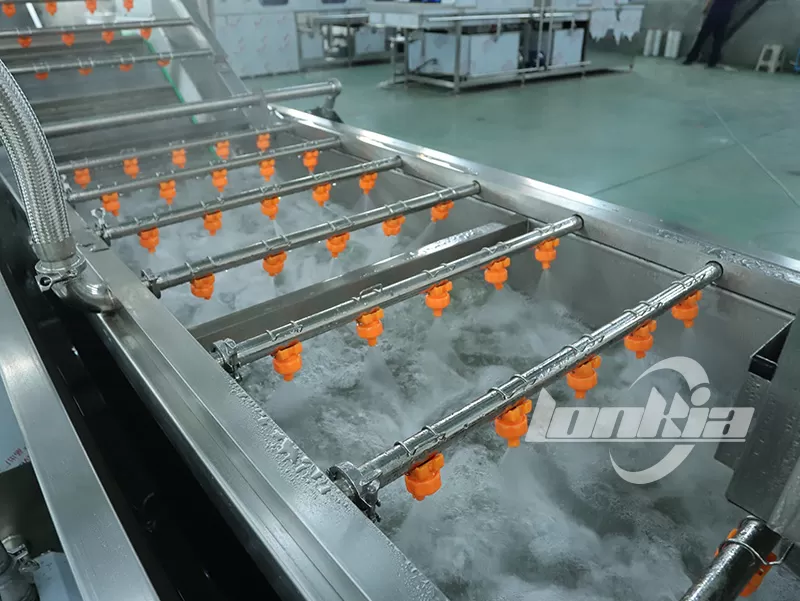
Using a fruit and vegetable washer equipped with a high-pressure bubble system and a recirculating filtration unit allows the produce to tumble thoroughly in the water, ensuring that soil and impurities are continuously separated and flushed out. For root vegetables such as carrots and potatoes, a spray system can be integrated to further improve cleanliness.
Issue 2: Damage to or Bruising of Fruit and Vegetable Surfaces
Many companies worry that automated washing will cause product damage, particularly for leafy greens and berries.
Common causes include:
- Excessive water impact
- Excessively fast conveyor speed
- Excessive mechanical friction
Solution:
Select a vegetable cleaner machine that uses a gentle bubble washing method. This method utilizes the gentle tumbling effect created by bursting bubbles to replace mechanical friction, achieving "deep cleaning without damaging the produce." For products such as strawberries, grapes, and lettuce, more stable cleaning results can be obtained by adjusting the blower and conveyor speed.
Issue 3: Production Efficiency Fails to Meet Order Demand
As order volumes increase, traditional manual washing often becomes a production bottleneck.
Common Symptoms:
- Slow cleaning speed
- Increased labor requirements
- Unstable product quality
Solution:
Automatic fruit and vegetable washing equipment enables continuous operation. When integrated with a conveyor system for automatic feeding and unloading, it significantly boosts production efficiency. At the same time, consistent cleaning results help ensure uniform product quality.
Issue 4: Gradual Decline in Performance After Equipment Operation
Some companies have observed a noticeable decline in cleaning effectiveness after the equipment has been in use for a period of time.
Possible causes include:
- Clogged piping
- Accumulation of impurities in the filtration system
- Reduced efficiency of the bubble generation system
Solution:
Establish a regular maintenance schedule to promptly clean the filtration system and inspect the operating status of the blower and spray system. High-quality stainless steel equipment is not only easy to clean and maintain but also extends the equipment's service life.
How to Choose the Right Fruit and Vegetable Washer?
When purchasing fruit vegetable washer machine, we recommend focusing on the following key points:
- Does it feature a stable bubble washing system?
- Is it equipped with a recirculating filtration system?
- Is the conveyor speed adjustable?
- Is it made of food-grade 304 stainless steel?
- Can it be integrated with downstream processing equipment?
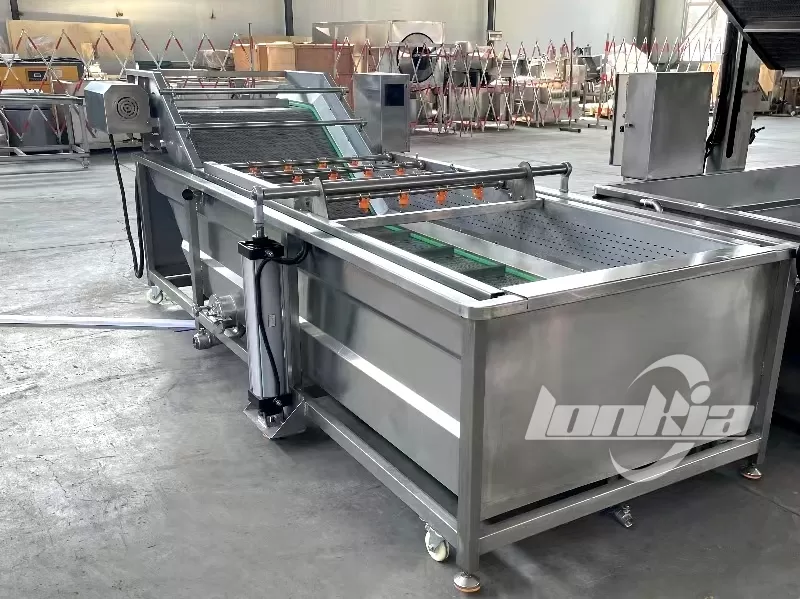
Take Lonkia's fruit and vegetable washing equipment as an example. It employs a design that combines bubble agitation with spray rinsing, making it suitable for a wide range of products—including leafy greens, fruits, and root vegetables—and providing customers with a stable, efficient washing solution.
Conclusion
Washing effectiveness directly impacts the quality, shelf life, and market competitiveness of fruit and vegetable products. When faced with issues such as incomplete cleaning, product damage, and low efficiency, selecting the right fruit and vegetable washer is often more effective than simply increasing labor input. Through proper equipment configuration and standardized maintenance management, businesses can not only improve production efficiency but also achieve more consistent product quality, laying a solid foundation for subsequent processing and sales.