
In the processing of fruits and vegetables, washing is a critical step that affects product quality. For root vegetables such as potatoes and carrots, as well as leafy vegetables such as lettuce and spinach, traditional washing methods can easily cause surface damage due to excessive friction, while insufficient washing intensity makes it difficult to remove dirt and impurities.
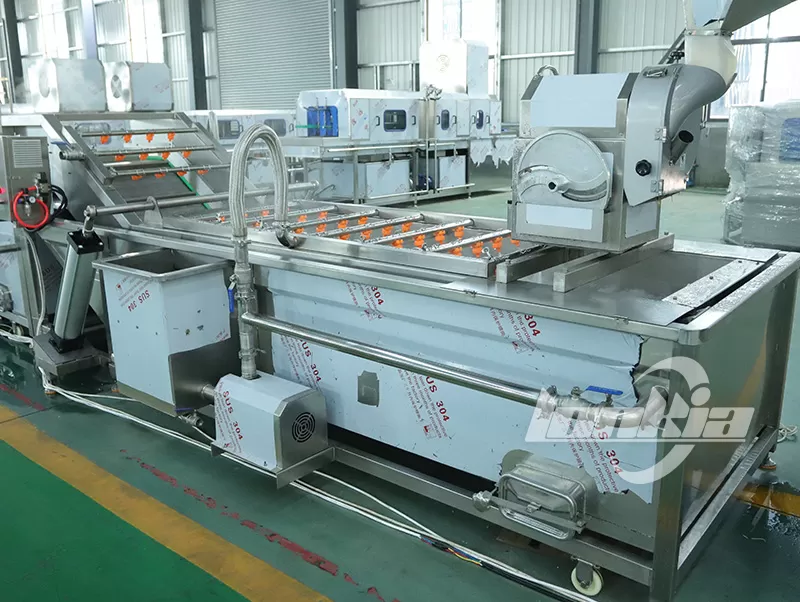
Bubble washers combine bubbles, water circulation, and a conveyor system to ensure effective cleaning while minimizing damage to the vegetable surface, making them particularly suitable for food processing production lines with high standards for appearance and integrity.
Why Does Vegetable Processing Require Gentle Cleaning?
Different types of vegetables have distinct structural characteristics. For example:
- Leafy greens are prone to breaking and deformation from compression;
- Fruit skins are susceptible to scratches;
- Fresh root and tuber products have soil and sand adhering to their surfaces, requiring thorough cleaning.
If excessive mechanical agitation or direct impact is used during the washing process, it will not only affect product appearance but may also compromise the effectiveness of subsequent processing steps. Therefore, when selecting washing equipment, food processing companies focus not only on cleaning performance but also place great emphasis on the equipment's ability to minimize product damage.
The Bubble Washer uses water flow and bubbles to replace intense mechanical friction, allowing the produce to tumble thoroughly in the water so that dirt gradually detaches from the surface while preserving the vegetables' original shape.
How Does Bubble Washing Technology Reduce Vegetable Damage?
The core advantage of the Bubble Washer lies in its bottom bubble generation system.
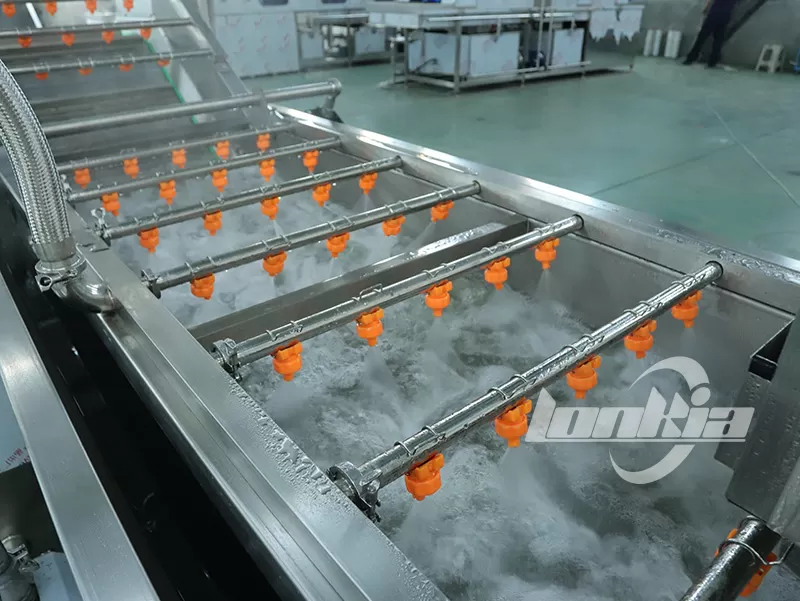
During operation, air enters the washing tank through the bubble generator, creating a large number of bubbles in the water. As the bubbles rise, they drive the water flow, causing the vegetables to gently tumble in the water and enabling multi-directional cleaning.
Compared to traditional brushing or vigorous agitation methods, bubble washing offers the following advantages:
1. Reduced Direct Mechanical Friction
During the washing process, vegetables are primarily propelled by water flow rather than subjected to friction from high-speed mechanical parts. This reduces the risk of damage to products with soft surfaces, such as lettuce, spinach, strawberries, and tomatoes.
2. Uniform Cleaning
Bubbles penetrate the gaps between products, making it easier to remove mud and impurities from hidden areas and preventing issues where certain areas are not thoroughly cleaned.
3. Flexible Adjustment of Conveyor Speed
Bubble washers are typically equipped with a conveyor system, allowing customers to adjust the conveyor speed based on the characteristics of different products. For vegetables prone to damage, the washing time can be extended so that the equipment completes the cleaning process more gently.
Key Equipment Components for Protecting Vegetable Integrity
A high-quality bubble washer relies not only on the bubble system but also on the coordinated operation of multiple components.
- Bubble Generator: The bubble generation system determines the flow dynamics of the water during the washing process. Stable, uniform bubbles prevent localized areas of excessive water flow, ensuring a gentler wash for the produce.
- Stainless Steel Washing Tank: Food processing equipment is typically manufactured from food-grade stainless steel, ensuring long-term stable operation while facilitating daily cleaning and maintenance.
- Conveyor System: The conveyor belt controls the dwell time of produce in the washing tank, ensuring that different vegetables receive the appropriate cleaning intensity based on their specific characteristics.
How the Lonkia Bubble Washer Supports Food Processing Lines?
In actual food processing operations, washing equipment must integrate seamlessly with subsequent processes—such as cutting, blanching, dehydration, and packaging—to ensure the stable operation of the entire production line.
Through its bubble washing, water circulation, and continuous conveying design, the Lonkia Bubble Washer provides a reliable washing solution for fruit and vegetable processing companies. The equipment's structural design emphasizes a balance between cleaning effectiveness and product protection, helping customers improve processing efficiency while maintaining raw material quality.
Summary
For food processing companies, washing requires not only the removal of dirt and impurities but also the preservation of vegetables' appearance and quality. The Bubble Washer utilizes a combination of bubbles, water flow, and a conveying system to achieve a gentler and more efficient cleaning method.
If your production line processes leafy greens, fruits, or root vegetables, selecting the right bubble washer can help reduce product damage, improve overall processing stability, and meet the demands of continuous food production.