
In potato processing and sorting, product size consistency directly impacts subsequent packaging, sales, and processing efficiency. As a result, an increasing number of companies are turning to potato grading machines to replace manual sorting.
However, equipment from different manufacturers varies significantly in terms of grading capacity, operational stability, and applicability. Without clearly defining requirements before purchasing, companies may easily face issues such as insufficient production capacity, inaccurate grading, or excessively high maintenance costs.
To help procurement personnel make more informed decisions, we have compiled the most critical considerations to address before purchasing a potato grading machine.
How Many Grading Levels can the Potato Grading Machine Achieve?
This is one of the most frequently asked questions by customers.
Different markets have varying requirements for potato specifications; some customers need two grades, while others require four or even more.
Therefore, when purchasing, it is essential to confirm whether the potato grading machine supports:
- Customizable number of grading levels
- Adjustment of the number of discharge outlets
- Setting of different size ranges
- Capability for future upgrades and expansion
A well-designed vegetable grading machine should be flexibly configurable according to the customer's product specifications to meet the sales demands of different markets.
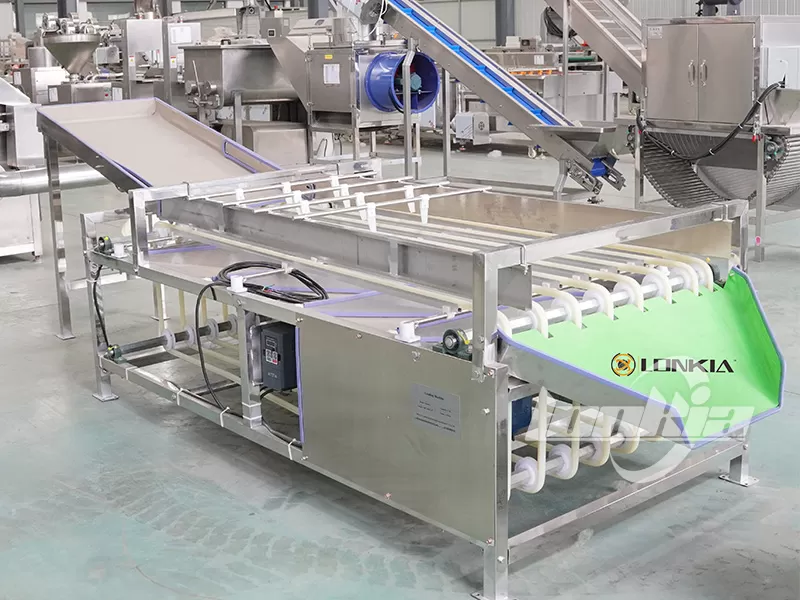
Does the Equipment's Capacity Meet Production Requirements?
Equipment capacity directly impacts production efficiency.
Before purchasing, it is recommended to clarify the following information:
- Hourly processing capacity requirements
- Daily operating hours
- Future capacity growth plans
- Whether continuous operation is required
Insufficient capacity can easily create production bottlenecks, while over-specifying the equipment will increase unnecessary investment costs.
Therefore, selecting a vegetable grading machine that matches actual needs is often more important than simply pursuing high output.
Is the Grading Accuracy Consistent?
Since customers ultimately sell products of uniform specifications, grading accuracy is particularly important.
When purchasing, it is recommended to focus on:
- Machining precision of drum aperture size
- Grading error range
- Equipment operational stability
- Consistency in performance after prolonged operation
Stable grading results improve product uniformity, reduce the workload of manual re-inspection, and enhance the product's market competitiveness.
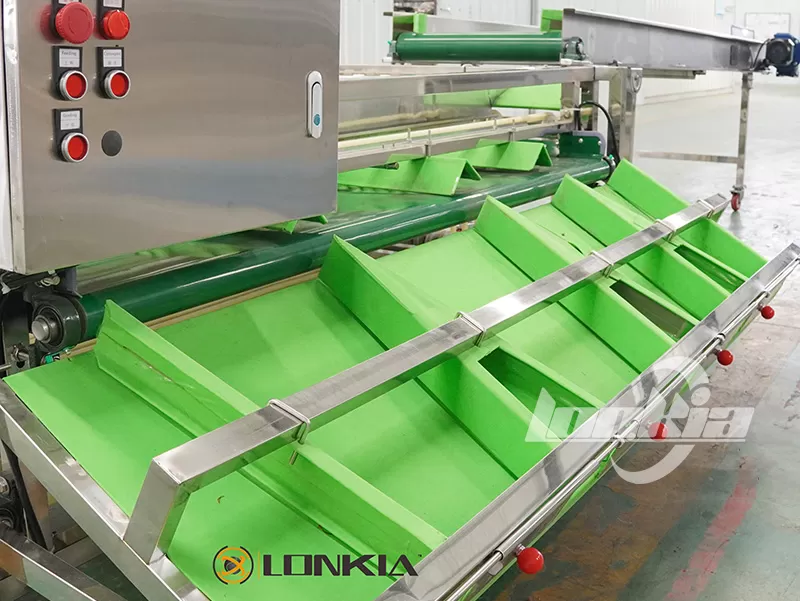
Does the Vegetable Grading Machine Damage Potatoes?
If potatoes are subjected to impact or compression during the grading process, they are prone to skin damage, which affects storage and sales.
High-quality potato grading machines typically feature the following characteristics:
- Smooth conveying structure
- Optimized drum rotation speed
- Optimized discharge method
- Smooth contact surfaces
These designs effectively reduce mechanical damage rates, helping businesses maintain product quality.
Is the Equipment Easy to Maintain?
Maintenance costs are also a key consideration during long-term operation.
When purchasing automatic fruit sorting and grading machine, focus on understanding:
- Replacement cycles for wear parts
- Ease of daily cleaning
- Maintenance methods for bearings and drive systems
- Ease of troubleshooting
Equipment with a simple structure and easy maintenance not only reduces downtime but also helps lower long-term operating costs.
Can It be Integrated into Existing Production Lines?
Many customers do not purchase vegetable grading equipment as a standalone unit but rather aim to integrate it into their existing potato processing systems.
Therefore, the following factors should be considered during selection:
- Conveyor interface dimensions
- Compatibility with upstream and downstream equipment
- Electrical control compatibility
- On-site installation space
Proper integration into the production line can further enhance overall operational efficiency.
Choosing a Reliable Supplier is Equally Important
In addition to the equipment itself, the supplier's technical capabilities and service quality deserve equal attention.
Professional manufacturers not only provide potato grading machines that meet specific requirements but also offer equipment selection advice, installation guidance, and ongoing technical support based on actual production conditions.
As a company specializing in the manufacture of fruit and vegetable processing equipment, Lonkia offers a variety of potato grading solutions tailored to different customer needs, helping clients achieve stable and efficient product grading. If you would like to learn more about equipment configuration options, please feel free to contact us at any time for professional advice.
Conclusion
When purchasing a potato grading machine, one should not focus solely on price but should comprehensively consider multiple factors, including grading accuracy, production capacity, precision, product protection capabilities, ease of maintenance, and compatibility with the production line.
Understanding these key considerations in advance not only helps businesses select equipment that better suits their needs but also ensures more stable and efficient grading results for subsequent production operations.