
In vegetable processing, many customers find that after purchasing a vegetable cutter slicer, it is not the machine itself but rather the appropriateness of the blade configuration that truly affects cutting performance. Different vegetables have varying requirements for blade structure, cutting angle, and sharpness. If the wrong blades are selected, issues such as uneven cuts, vegetable damage, jamming, and inconsistent sizing are likely to occur.
For food processing plants, pre-washed vegetable production lines, and central kitchens, the proper selection of blades not only affects product quality but also directly impacts production efficiency and equipment reliability.
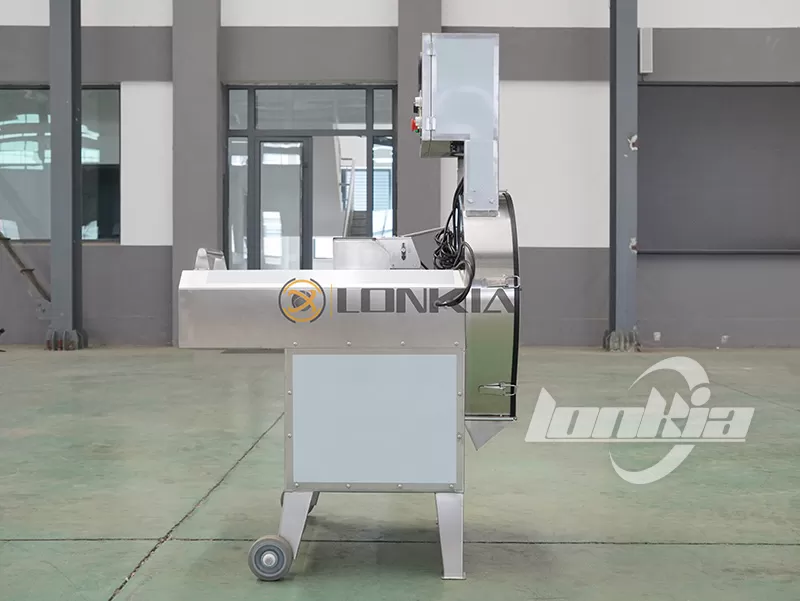
Why is the Selection of Blades for Vegetable Cutter and Slicers so Important?
The same machine can perform various processing methods—such as slicing, shredding, and dicing—by simply swapping out different blade sets. Different blades are designed for different material characteristics.
For example, leafy vegetables are relatively soft; if the blade angle is inappropriate, issues such as bruising or stringiness may occur. In contrast, root and stem vegetables are harder and require sharper, more wear-resistant blade designs. Some multi-functional vegetable cutters feature interchangeable blade discs, allowing for quick adjustments to the cutting method based on the specific vegetable.
Therefore, when purchasing cutting machine for vegetable, customers should not focus solely on output capacity but must also ensure that the blade system is suitable for their specific products.
Common Vegetable Cutter Slicer Blade Types
Flat Cutting Blades
These blades are commonly used for cutting leafy vegetables such as spinach, lettuce, leeks, and celery into segments.
They are characterized by clean cuts, minimal damage to the leaves, and suitability for continuous conveyor-fed cutting. Many salad processing plants prefer this design because it preserves the vegetables' appearance and reduces water loss.
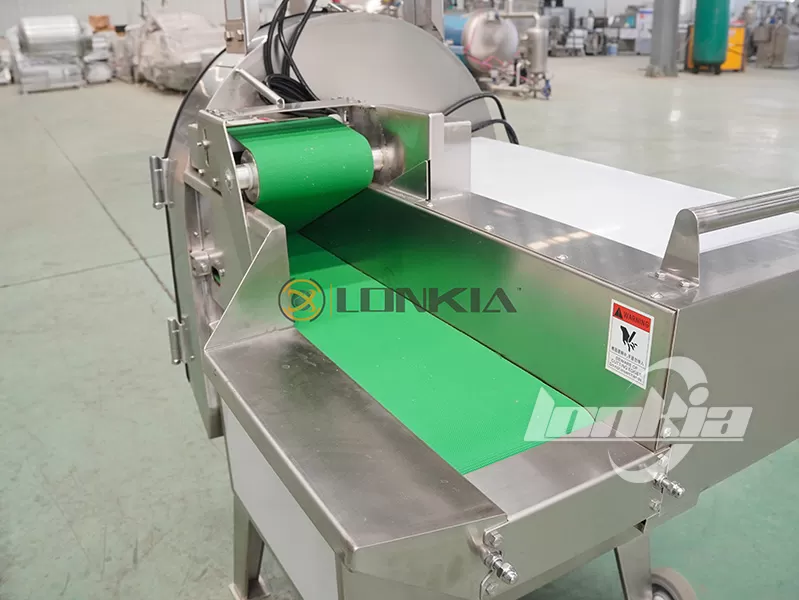
Equipment like Lonkia's cutting machine for vegetable typically adjust conveyor speed in conjunction with blade speed to achieve varying segment lengths, making them suitable for fresh-cut and prepared vegetable processing.
Disc Slicing Blades
Disc vegetable chopper dicer blades are primarily used for root and tuber vegetables such as cucumbers, potatoes, carrots, and onions.
These blades produce uniform slices through high-speed rotation, making them ideal for products with strict thickness requirements. Many potato chip, kimchi, and dehydrated vegetable processing plants place particular emphasis on slice uniformity, as this directly impacts the quality of subsequent frying or drying processes.
Shredding and Julienne Cutter Assemblies
Customers frequently use shredding cutter assemblies when producing potato shreds, carrot shreds, and cabbage shreds.
The key to these blades lies in the blade spacing design. The smaller the spacing, the finer the product; the larger the spacing, the more suitable it is for thicker strips. For central kitchens, multi-specification blade sets can reduce the cost of repeatedly purchasing equipment.
Many customers overlook the ease of blade set replacement during procurement, resulting in time-consuming blade changes later on, which affects production efficiency. Therefore, it is recommended to prioritize vegetable slicer cutters that support quick-release assembly and disassembly.
How to Select Blades Based on Vegetable Type?
Leafy Vegetables
Such as spinach, lettuce, Chinese chives, cabbage, etc.
We recommend thin, sharp blades paired with a feed-pressing mechanism. This minimizes vegetable deformation while ensuring clean, even cuts.
Root and Stem Vegetables
Such as potatoes, radishes, carrots, etc.
It is recommended to choose wear-resistant blades, as these vegetables are relatively hard and cause more significant wear on the blades. Some rotating disc structures are more suitable for processing this type of material.
High-Moisture Vegetables
Such as cucumbers, tomatoes, etc.
The blades must maintain a high level of sharpness; otherwise, sticking and uneven cuts are likely to occur.
Blade Material Determines Equipment Lifespan
Currently, most mainstream vegetable cutter slicers use food-grade stainless steel blades. High-quality blades are not only sharper but also corrosion-resistant and wear-resistant, capable of withstanding prolonged continuous production.
For food processing companies, blade stability directly impacts downtime frequency. Frequent blade replacement not only increases maintenance costs but also affects order fulfillment efficiency.
Therefore, when purchasing vegetable cutter equipment, customers should not focus solely on the machine price but should also prioritize understanding blade material, blade assembly structure, and future replacement costs.
Conclusion
For vegetable cutter slicers, the blade system determines the final cutting result. The right blades not only improve product consistency but also reduce material waste and increase production efficiency.
When selecting vegetable cutting equipment, customers should choose a blade configuration that matches their specific processing materials, product specifications, and production requirements. Consistent cutting results often stem from the correct blade configuration and a well-engineered machine design. This is particularly important for food processing companies engaged in long-term, continuous production.