
In the processing of pre-washed vegetables, central kitchens, ready-to-cook meals, and food manufacturing facilities, the vegetable cutting stage directly impacts product appearance, processing efficiency, and the quality of subsequent packaging. When selecting a vegetable slicer, many customers are most concerned about two key questions: What types of produce is this machine suitable for? Can it meet the continuous processing needs of a wide variety of vegetables?
In fact, a reliable vegetable slicer cutter is not only suitable for leafy greens but can also process certain root vegetables and fruits, achieving various cutting effects such as dicing, slicing, and julienning. This helps businesses improve production efficiency and reduce labor costs.
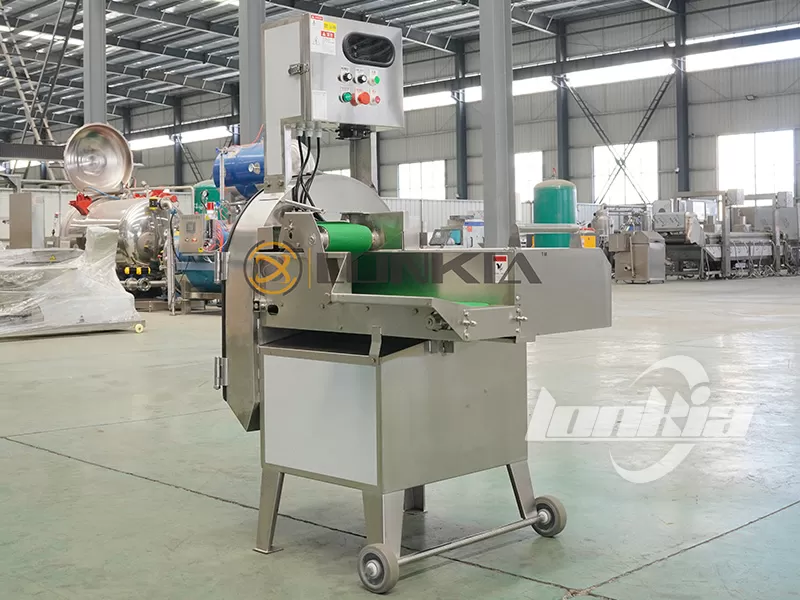
What Vegetables are Commonly Processed by Vegetable Slicer Cutters?
In actual production, the types of vegetables processed by different customers vary significantly, so the equipment's adaptability is crucial.
A professional vegetable slicer cutter can be widely used for:
- Spinach
- Lettuce
- Chinese chives
- Celery
- Cabbage
- Napa cabbage
- Green onions
- Cilantro
- Cucumbers
- White radishes
- Carrots
- Potatoes
- Onions, etc.
For leafy vegetables, customers typically focus more on whether the cuts are neat and whether the vegetables are prone to bruising. For hard ingredients like carrots and radishes, the primary concerns are whether the equipment can feed material steadily, cut evenly, and whether it is prone to jamming.
A reliable vegetable cutting machine typically combines continuous feeding with a high-speed blade assembly, ensuring consistent cutting results for various types of vegetables.
Why are More and More Customers Choosing Multi-functional Vegetable Slicers?
Many food processing plants no longer process a single product but need to handle multiple types of vegetables simultaneously. As a result, "one machine, multiple uses" has gradually become a key requirement for customers during procurement.
Compared to traditional single-function cutting equipment, multi-functional vegetable slicer cutters offer the following advantages:
- More flexible cutting specifications: By swapping out different blade sets, the machine can achieve various processing effects—such as dicing, slicing, and julienning—to meet different product requirements.
- Adaptability to materials of varying lengths and hardness: Whether processing leafy greens or certain root vegetables, the equipment maintains a stable processing performance.
- Easy integration with other equipment: The fruit and vegetable cutting machine can be integrated with washers, blanchers, packaging machines, and other equipment to form a continuous production line, improving overall processing efficiency.
Lonkia's vegetable slicer cutter can be customized based on the customer's processing materials and finished product specifications, helping customers complete their vegetable processing workflow more efficiently.
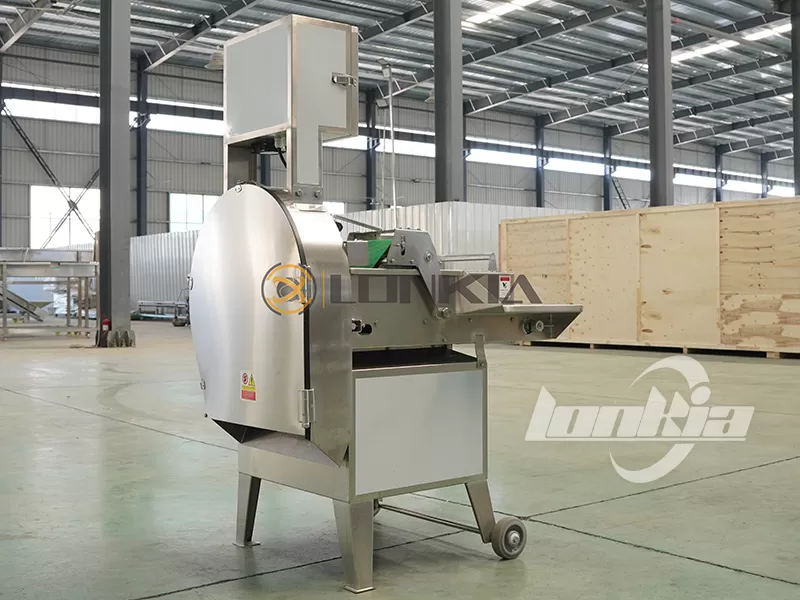
Common Questions When Selecting a Vegetable Slicer Cutter
When purchasing vegetable cutting equipment, many customers look beyond price and focus on whether the equipment will operate reliably in the long term and whether it is truly suitable for their products.
The most common concerns include:
- Is the cutting uniform? Consistency in finished product specifications directly impacts product presentation and packaging results, particularly in the fresh-cut and prepared meal industries, where cutting dimensions are highly critical.
- Is the machine prone to jamming? Leafy vegetables have high moisture content; if the equipment design is suboptimal, accumulation and jamming issues can easily occur.
- Are the blades durable? During long-term continuous operation, blade quality directly affects maintenance costs and production stability.
- Is it easy to clean? The food processing industry has strict hygiene requirements; a modular design and food-grade stainless steel construction can simplify the cleaning process.
- Can it operate continuously? A stable conveyor system and a well-designed cutting mechanism are crucial for continuous production in a factory setting.
Conclusion
As the food processing industry places increasing emphasis on efficiency and product standardization, more and more companies are adopting automatic vegetable slicers to handle vegetable cutting tasks.
A reliable vegetable slicer cutter can not only process leafy greens but also accommodate a variety of ingredients such as carrots, radishes, and cucumbers, helping businesses achieve more flexible and efficient production models.
When making a purchase, customers are advised to focus on the machine's cutting performance, feed stability, blade design, and range of compatible ingredients to ensure they select a vegetable slicer cutter that truly meets their production needs.