
Food safety has become a top priority for vegetable processors, frozen food manufacturers, and ready-to-eat meal producers. One of the most effective pre-processing steps to improve safety and quality is vegetable blanching. But what exactly is vegetable blanching, and how does a vegetable blanching machine help reduce pesticide residues?
This article explains the blanching process, its role in pesticide removal, and why modern blanching machines are essential for industrial vegetable processing.
What Is Vegetable Blanching?
Vegetable blanching is a short heat treatment process in which vegetables are exposed to hot water or steam for a controlled period, followed by rapid cooling. Unlike cooking, blanching is brief and carefully controlled to preserve texture, color, and nutrients.
Blanching is widely used before:
Freezing vegetables
Drying or dehydration
Canning and further thermal processing
Frying or stir-frying in industrial lines
How Blanching Helps Remove Pesticide Residues
While washing removes surface dirt, washing alone is often insufficient to eliminate pesticide residues. Blanching provides additional benefits:
1. Thermal Degradation of Pesticides
Many pesticides are heat-sensitive. The controlled heat exposure during blanching helps break down chemical residues that remain after washing.
2. Enhanced Leaching Effect
Hot water blanching increases the solubility of certain pesticides, allowing them to leach out into the blanching water more effectively than cold rinsing.
3. Combined Effect with Washing Systems
When blanching follows industrial vegetable washing, the combined process significantly reduces overall contamination risk, meeting stricter food safety standards.
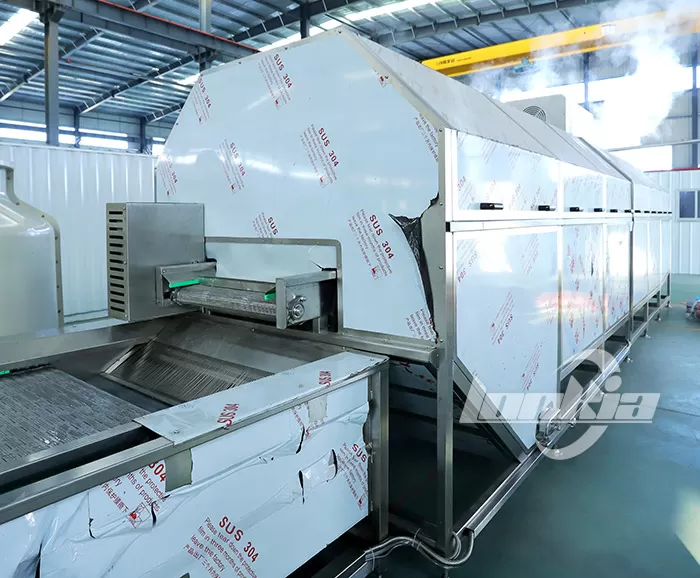
Role of a Vegetable Blanching Machine in Industrial Processing
A vegetable blanching machine is designed to deliver consistent temperature, time control, and throughput—something manual blanching cannot achieve at scale.
Key functions include:
Precise temperature control (typically 85–100°C)
Adjustable blanching time based on vegetable type
Continuous operation for high-capacity production
Integration with washing, cooling, and freezing lines
Types of Vegetable Blanching Machines
Hot Water Blanching Machines
Ideal for leafy vegetables and soft produce
Strong leaching effect for pesticide reduction
Simple structure and easy integration
Steam Blanching Machines
Lower water consumption
Better nutrient and color retention
Suitable for large-scale industrial lines
Additional Benefits Beyond Pesticide Removal
Besides reducing pesticide residues, vegetable blanching machines offer multiple processing advantages:
Enzyme deactivation, preventing discoloration and quality loss
Color stabilization, especially for green vegetables
Texture improvement before freezing or frying
Reduced microbial load, improving shelf life
These benefits make blanching a critical step in modern vegetable processing plants.
Which Vegetables Benefit Most from Blanching?
Vegetable blanching machines are commonly used for:
Spinach, broccoli, green beans
Carrots, peas, corn
Potatoes (before frying or freezing)
Mixed vegetables for frozen food
Each vegetable requires different blanching parameters, which industrial machines can easily adjust.
Choosing the Right Vegetable Blanching Machine
When selecting a blanching machine for pesticide removal, consider:
Required processing capacity (kg/h or t/h)
Hot water vs. steam blanching method
Energy efficiency and water consumption
Ease of cleaning and food-grade materials
Compatibility with your existing production line
Working with an experienced manufacturer ensures the machine is optimized for your specific vegetables and safety goals.
Conclusion
Vegetable blanching is far more than a simple heat treatment—it plays a crucial role in pesticide reduction, enzyme deactivation, and quality preservation. A well-designed vegetable blanching machine allows food processors to achieve consistent safety standards while maintaining product quality and efficiency.
For companies focused on safe, high-quality vegetable products, investing in the right blanching technology is a smart and future-proof decision.