
Leafy vegetables, such as spinach, lettuce, parsley, and cilantro, are characterized by soft leaves, irregular shapes, and a tendency to accumulate soil and sand. During industrial processing, effectively removing soil and impurities from the surface of the leaves while avoiding mechanical compression, leaf damage, and deformation is a key consideration for vegetable processing companies when selecting washing equipment.
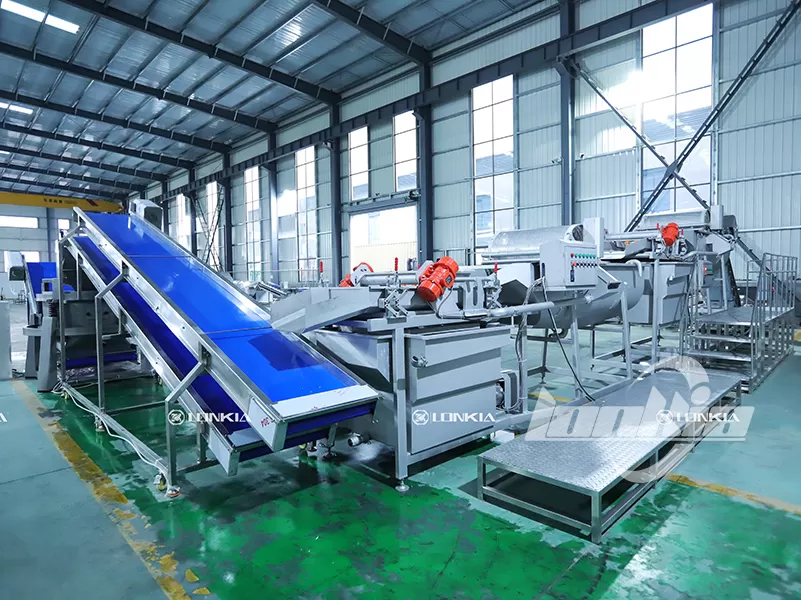
A properly configured vegetable wash line must not only ensure effective cleaning but also balance material conveyance, washing intensity, and subsequent drainage. By appropriately combining bubble washing, spray rinsing, and vibrating drainage equipment, it is possible to meet cleaning requirements while minimizing mechanical damage to leafy vegetables during processing.
What Problems Commonly Arise with Leafy Vegetables During Industrial Washing?
1. Excessive cleaning intensity can easily cause leaf damage
The leaves of leafy vegetables such as spinach and lettuce are relatively tender. If excessive mechanical friction or improper conveying methods are used, the leaves are prone to tearing, crushing, and deformation, which affects subsequent processing and product appearance.
2. Insufficient cleaning leads to residual soil and sand
Soil and impurities tend to accumulate in leaf folds and at the junctions between stems and leaves. A single washing step may not meet processing requirements, especially when raw materials have high sand content; a properly designed multi-stage washing process is necessary.
3. Improper Conveying and Draining Increase Product Damage
If washed leafy greens are piled too high or subjected to unnecessary compression during conveying, leaf integrity may be compromised. Therefore, washing equipment must be properly integrated with subsequent conveying and draining systems.
How Can Equipment Configuration Reduce Damage to Leafy Greens?
1. Use bubble washers to reduce mechanical friction
Bubble washers utilize the combined action of airflow and water flow to agitate the vegetables within the washing tank, helping to separate mud, sand, and impurities from the leaf surfaces. Compared to methods that rely on vigorous mechanical brushing, this cleaning method reduces direct friction between the leaves and mechanical components.
When configuring the bubble cleaning equipment, the bubble intensity and conveyor speed should be adjusted based on the vegetable type, leaf condition, and actual cleaning requirements to avoid excessive agitation of the produce.
2. Combine with spray washers to improve overall cleaning effectiveness
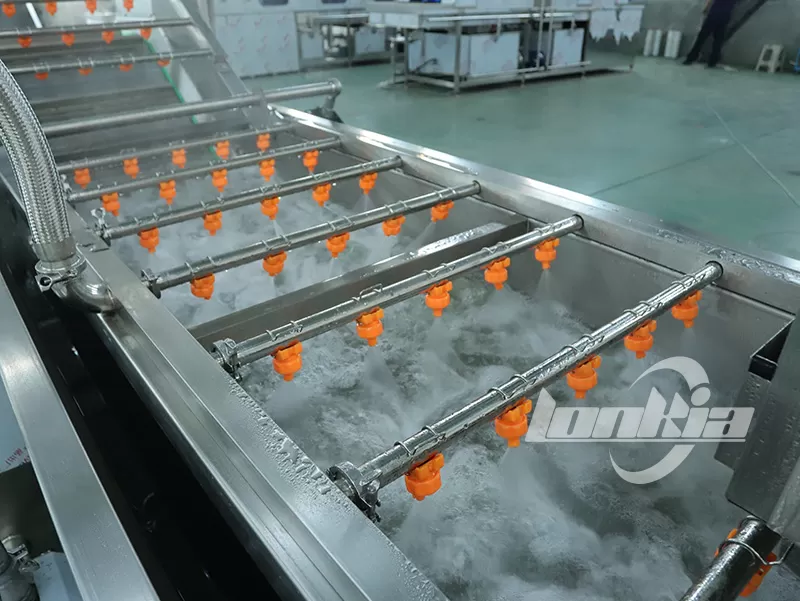
After bubble washing, the vegetables can proceed to the spray washing stage, where a uniform water flow further rinses away any remaining impurities from the leaf surfaces.
Spray pressure, nozzle distribution, and conveyor speed all affect cleaning effectiveness. Properly configuring the spray system ensures a balance between rinsing effectiveness and leaf integrity.
3. Incorporate a dewatering machine to reduce squeezing during subsequent processing
After washing, the vegetable dewatering machine uses a vibrating conveyor mechanism to help remove moisture adhering to the surface of the vegetables. Compared to repeated manual handling and squeezing, a well-designed mechanized drainage process helps minimize unnecessary contact with the produce.
What Else Should Be Considered When Selecting a Vegetable Wash Line?
In addition to the washing capacity of individual units, attention must also be paid to whether the configuration of the entire vegetable wash line is appropriate.
- Material Compatibility: Determine the washing method based on the characteristics of different vegetables, such as spinach, lettuce, and parsley.
- Equipment Operating Parameters: Ensure that bubble intensity, spray pressure, and conveyor speed can be adjusted appropriately.
- Equipment Design: Pay attention to the materials used in food-contact surfaces, the internal structure of the equipment, and the ease of cleaning and maintenance.
- Process Integration: Ensure that the processing capacities of the washing, spraying, and draining equipment are properly matched to prevent product buildup.
The LONKIA vegetable wash line can be configured with equipment such as inspection tables, bubble washers, spray washers, and vibrating drainers based on actual processing materials and production capacity requirements, providing a comprehensive washing solution for leafy vegetable processing.
How to Obtain a More Suitable Equipment Configuration Plan?
Washing requirements vary among different leafy vegetables; therefore, it is recommended to provide information such as raw material types, hourly processing capacity, washing requirements, and plant layout prior to purchasing. Based on this information, equipment suppliers can determine the cleaning process, equipment combination, and conveying method.
A well-designed equipment configuration is key to balancing cleaning effectiveness with leaf integrity. Selecting a vegetable wash line suited to the characteristics of your specific produce will better meet continuous processing needs and improve overall production efficiency.
For more information on equipment configurations and customized solutions, please contact LONKIA to obtain a vegetable washing production line solution tailored to your actual processing needs.