
Tomato grading machines can sort tomatoes according to preset standards, helping processing companies improve sorting efficiency and ensure product consistency. However, in actual production, issues such as uneven grading, unstable conveying, and abnormal output may still affect equipment operation. Understanding common malfunction causes and how to troubleshoot them can reduce downtime and maintain consistent grading results.
How Should Uneven Tomato Grading Be Addressed?
1. Check Grading Parameters and Equipment Configuration
If tomatoes of different sizes end up in the same grade, or if tomatoes from the same batch are sorted into different outlets, first check whether the grading intervals are set appropriately. For a tomato grading machine that grades based on roller spacing, verify that the spacing meets the target size requirements; for equipment using sensors or vision systems, check the parameter settings and recognition status.
Additionally, irregularly shaped tomatoes or significant size variations may also affect grading results. Test with representative samples of different sizes, and adjust parameters based on actual sorting conditions.
2. Maintain a Consistent Feed Rate
Concentrated piles of tomatoes or excessively fast continuous feeding may cause the fruits to squeeze against each other, affecting the tomato grading machine's recognition and sorting capabilities. Operators should control the feed rate according to the equipment's processing capacity to ensure tomatoes enter the grading area as evenly as possible.
What Should Be Done if Tomato Conveyance Is Unstable or Damage Occurs?
1. Inspect Conveyor and Transfer Points
If tomatoes sustain bruises, indentations, or become jammed during conveyance, inspect the conveyor belt's operating condition, guide components, rollers, and transfer points between equipment. Excessive height differences, abnormal vibrations, or loose components may all increase the risk of fruit damage.
2. Adjust the Operating Speed
The conveyor speed must be matched to the feed rate and grading requirements. Excessively high speeds may increase the risk of fruit collisions and abnormal sorting, while excessively slow speeds may affect overall processing efficiency. It is recommended to conduct tests using actual tomato samples, gradually adjust operating parameters, and record grading results and damage levels.
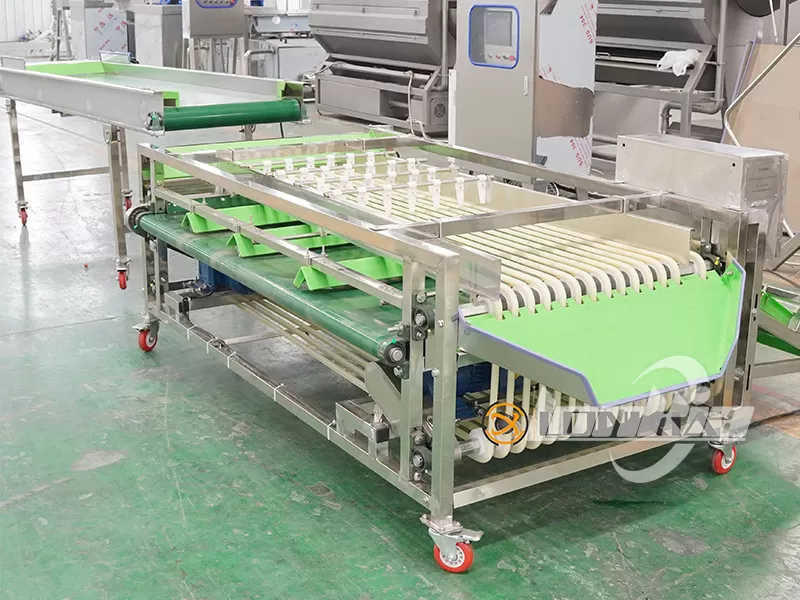
Abnormal Discharge or Reduced Operating Efficiency of the Tomato Grading Machine
1. Inspect the Discharge Channels
If tomatoes cannot flow smoothly into the corresponding outlets, check the discharge channels for blockages, foreign objects, or misaligned components. Also, verify that the discharge directions for each grade align with the downstream receiving equipment to prevent tomatoes from accumulating at the outlets.
2. Inspect Mechanical and Electrical Components
When the tomato grading machine emits abnormal noises, experiences fluctuations in conveyor speed, or shuts down frequently, inspect the drive components, fasteners, motor, and control system for abnormalities. Before performing maintenance, shut down the equipment and disconnect the power supply in accordance with the equipment manual; issues involving the electrical system or safety devices must be handled by qualified personnel—do not arbitrarily disassemble or bypass safety devices.
How to Reduce Tomato Grading Machine Malfunctions?
Routine maintenance should include cleaning the equipment's contact parts, inspecting the conveying and drive mechanisms, verifying the condition of fasteners, and periodically checking wear-prone components. Cleaning and maintenance procedures must comply with the manufacturer's requirements to prevent improper operation from affecting the equipment's accuracy or service life.
For companies planning to purchase equipment, they should also consider whether grading parameters are easy to adjust, whether key components are accessible for inspection, and whether the supplier can provide operational training, technical support, and spare parts services. LONKIA can assist in evaluating suitable sorting equipment configurations based on customers' product specifications and production requirements.
How Can You Verify Equipment Suitability Before Purchasing?
We recommend that customers prepare tomato samples of various sizes, clearly define target grading standards and expected processing capacity in advance, and record grading results, processing speed, and fruit damage during testing. For production tasks requiring multiple grades, it is also important to confirm the equipment's grading range, outlet configuration, and parameter adjustment methods.
If you are looking for a tomato grading solution, please contact LONKIA and provide your tomato size range, grading requirements, and target production capacity so we can further evaluate equipment suitability and configuration options.