
In the garlic processing industry, the effectiveness of peeling not only affects production efficiency but also directly impacts the integrity of the garlic cloves, the appearance of the finished product, and raw material utilization. For manufacturers of fresh peeled garlic cloves, minced garlic, and seasonings, minimizing damage to the garlic cloves while quickly removing the skins is a key consideration when selecting a garlic peeler. Pneumatic peeling technology uses compressed air to separate the garlic skins, offering a practical solution for reducing damage caused by mechanical compression.
How Does a Garlic Peeler Remove Skin Without Damaging Cloves?
The operating principle of industrial garlic peeling machines affects the final condition of the cloves. Unlike methods that rely primarily on mechanical friction or compression, pneumatic garlic peeling machines use airflow to separate the skins from the cloves, reducing direct friction between the cloves and mechanical components during the peeling process.
1. Utilizing Pneumatic Peeling Technology
The key to pneumatic peeling lies in using compressed air to separate the skins rather than simply increasing mechanical force. A properly calibrated airflow helps remove dry skins while preserving the cloves' original shape as much as possible.
This method is suitable for processing scenarios that require intact cloves, such as packaging fresh peeled cloves, processing minced garlic, and producing food ingredients. However, the actual peeling results are still influenced by the condition of the raw material and equipment parameters.
2. Properly Adjusting Air Pressure and Peeling Time
Insufficient air pressure or peeling time may result in residual garlic skins; conversely, excessive air pressure or prolonged processing time may increase the risk of surface damage to the garlic cloves.
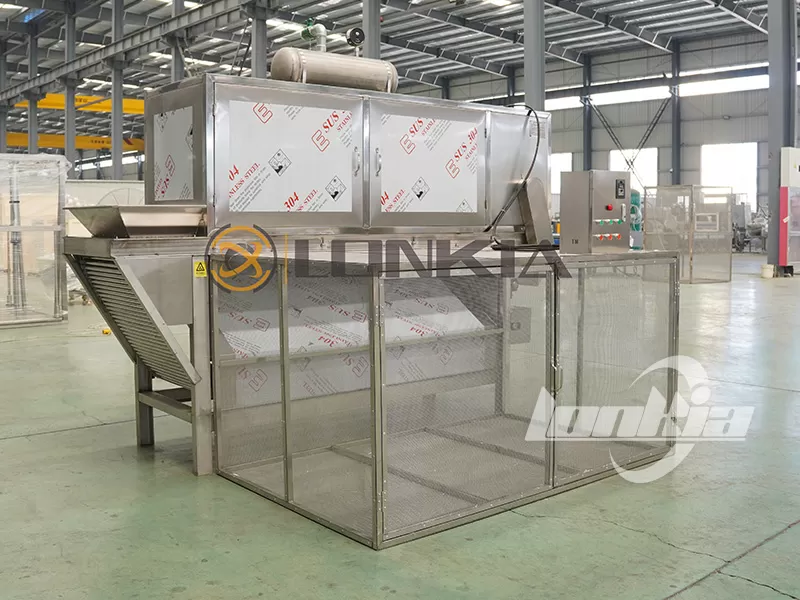
Therefore, operators should not simply aim for higher air pressure; instead, they should gradually adjust parameters based on the size of the garlic cloves, the condition of the skin, and actual test results. The Lonkia pneumatic garlic peeler supports adjustment of both air pressure and peeling time, helping to adapt to the conditions of different batches of raw materials.
What Factors Affect the Integrity of Garlic Cloves?
Even when using pneumatic garlic peeling equipment, raw material handling and operating methods still affect the quality of the finished product.
1. Garlic Quality and Skin Condition
The variety, size, ripeness, and dryness of the garlic skin all affect peeling performance. For raw materials with damp or inconsistent skin conditions, it is recommended to conduct small-batch tests first to determine whether pretreatment methods need to be adjusted.
2. Feeding Method and Equipment Operating Conditions
Excessively concentrated feeding, significant variations in raw material size, or unreasonable equipment parameter settings can all lead to unstable processing results. Maintaining a uniform feed rate and regularly inspecting the air supply and pneumatic components will help ensure consistent peeling performance.
How to Choose the Right Garlic Peeler?
When purchasing a garlic peeler, it is recommended to focus on verifying the following:
- Peeling Effectiveness: Check for residual garlic skins and the actual peeling rate.
- Clove Integrity: Calculate the proportions of intact cloves, damaged cloves, and material requiring reprocessing.
- Parameter Adjustment Capabilities: Confirm whether air pressure and peeling time are adjustable.
- Processing Capacity: Verify that the equipment's actual processing volume meets production plans.
- Air Supply Requirements: Confirm the required air pressure, air flow rate, and specifications for the air compressor.
It is recommended to conduct a test run using the customer's actual garlic for processing and to record the input volume, the quantity of successfully peeled garlic, and the damage rate. This approach is more reliable than judging equipment performance based solely on rated capacity.
Summary
When selecting a suitable garlic peeler, it is important to not only focus on peeling speed but also to comprehensively evaluate clove integrity, raw material loss, and downstream processing requirements. By appropriately adjusting air pressure and peeling time, combined with a stable raw material processing workflow, you can better balance peeling efficiency and finished product quality.
Lonkia provides industrial garlic peeling equipment and can assist in evaluating equipment configurations based on the characteristics of the customer’s raw materials, target production capacity, and intended use of the finished product. Please contact us to learn more about our equipment and discuss solutions tailored to your production needs.