
Setting up an onion processing line does not mean equipping it with all the necessary machinery at once. For food processing companies, true value for money comes from properly matching production capacity, reducing unnecessary manual steps, minimizing raw material waste, and ensuring a smooth transition between each process. A well-designed onion processing line can handle a continuous processing workflow—including peeling, trimming, washing, dicing, and packaging—and can be flexibly configured based on the final product.
Determine Equipment Configuration Based on Actual Production Capacity
When selecting an onion processing line, you should first determine how many onions need to be processed per hour, then match each piece of equipment to the line's overall cycle time. If there is a significant disparity in production capacity between the peeler, trimmer, washer, and dicer, it can easily lead to waiting times, backlogs, or idle equipment.
Therefore, rather than pursuing high production capacity for a single machine, it is better to maintain a stable processing speed across the entire production line. For companies planning future capacity expansions, it is also advisable to leave room for upgrades in key stages such as conveying, dicing, and packaging.
Prioritize Equipment That Truly Impacts Final Product Quality
Peeling and Trimming Determine the Outcome of Subsequent Processing
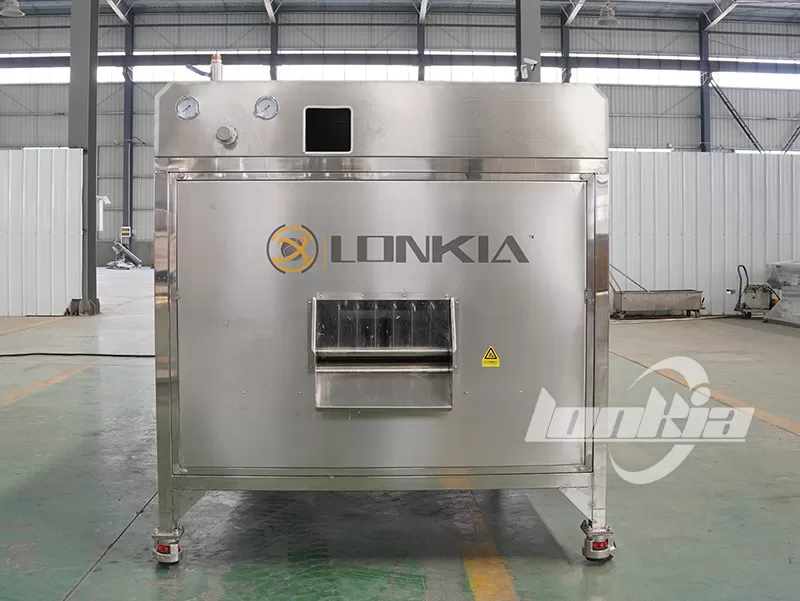
Onion peeling is a critical front-end process. The onion peeler machine's pneumatic peeling method uses compressed air to remove the outer skin, reducing damage caused by direct contact between blades and the onion flesh. Root and stem trimming equipment removes the ends, giving the onions a more uniform shape and creating stable conditions for subsequent washing and cutting.
Select a Onion Dicing Machine Based on the Final Specifications
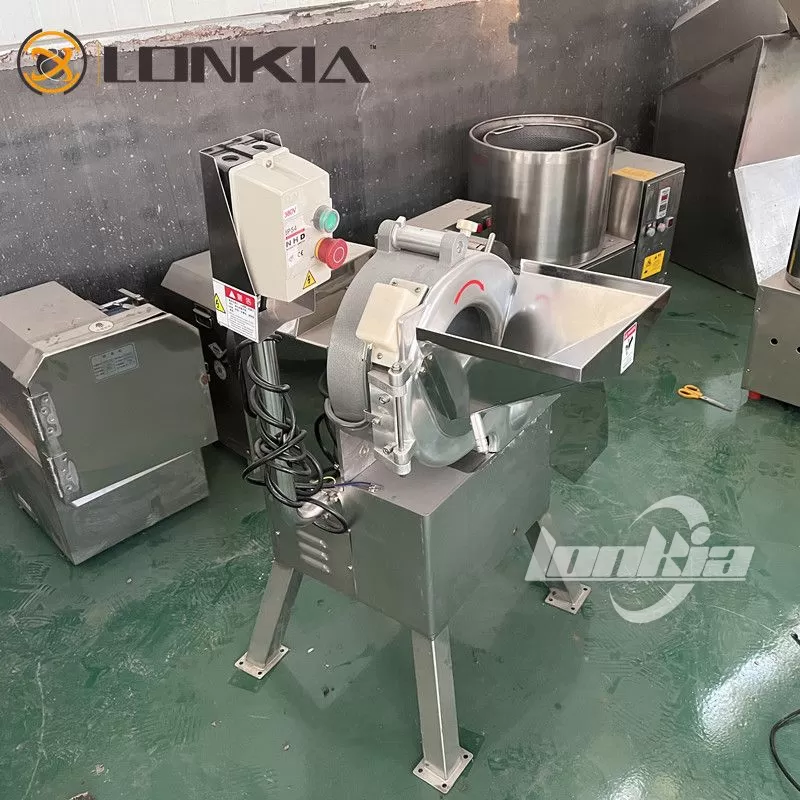
If the primary production is diced onions, focus on confirming the dice size, uniformity, blade configuration, and feed method. Common onion dicer specifications include 5 mm, 8 mm, and 10 mm, and different product requirements can be met by replacing the blades.
Do Not Overlook the Washing and Packaging Stages
Washing equipment not only affects the hygiene of the finished product but also impacts the stability of subsequent cutting operations. Bubble washers thoroughly clean onions using a combination of water flow and agitation from bubbles, while minimizing mechanical damage to the raw material.
For packaging, choose between weigh-pack or continuous packaging methods based on sales specifications. If the product range is limited in the early stages, there is no need to blindly add complex packaging configurations; instead, prioritize equipment that matches actual packaging needs.
Control Initial Investment Through Modular Design
A cost-effective onion processing line does not necessarily need to incorporate all functions at once. LONKIA can design configurations tailored to the customer's production capacity, product specifications, and process requirements. For example, grading or packaging equipment can be added to the basic peeling, trimming, washing, and dicing processes as needed. The production line can also select different processing paths based on specific products.
This configuration approach avoids purchasing equipment that isn't immediately needed, while also making it easier for companies to add product specifications or increase processing capacity in the future.
Comprehensively Calculate Equipment Costs During Procurement
Determining whether an onion processing line offers good value for money requires more than just comparing equipment quotes. You must also consider equipment capacity, raw material loss, labor requirements, ease of maintenance, equipment materials, and future expansion capabilities. The price of an onion processing line is typically influenced by factors such as configuration, capacity, materials, and the degree of automation.
Reasonable configuration—rather than simply pursuing the lowest price—is the key to establishing a cost-effective onion processing line. Determining the equipment combination based on actual raw materials, target products, production capacity, and facility conditions is the only way to ensure that every onion processing machine truly fulfills its intended function.