
The fruit and vegetable washer machine is a key piece of equipment in fruit and vegetable processing lines. During continuous operation, mud, sand, leaves, fruit peels, and other residues can enter the washing system. Without proper maintenance, this can not only affect washing performance but also increase the risk of equipment malfunctions and downtime. For food companies that require continuous processing, establishing simple and clear maintenance procedures helps ensure stable equipment operation.
Daily Cleaning Is the Foundation of Equipment Maintenance
Promptly Clean the Wash Tank and Filter Components
After each production run, promptly drain the wastewater from the wash tank and remove any sediment and raw material residue that has settled at the bottom of the tank. For fruit and vegetable washer machines equipped with filtration systems, also check whether the filter screens are clogged.
If impurities accumulate in the filtration system over time, the amount of solid residue in the recirculating water will increase, thereby affecting the effectiveness of the spray, bubble, or recirculating water cleaning processes. Therefore, the filter screen, drain outlet, and sedimentation area should be the focus of daily inspections.
Keep the Spray and Bubble Systems Unobstructed
Clogged nozzles can lead to insufficient water flow in certain areas, resulting in uneven cleaning of fruits and vegetables as they pass through the equipment. After production ends, check the nozzles for silt or plant debris and clean them as needed based on usage.
For fruit and vegetable washer machine using bubble washing, it is also necessary to inspect the air hoses, bubble generators, and related connections to ensure normal water flow and bubble distribution.
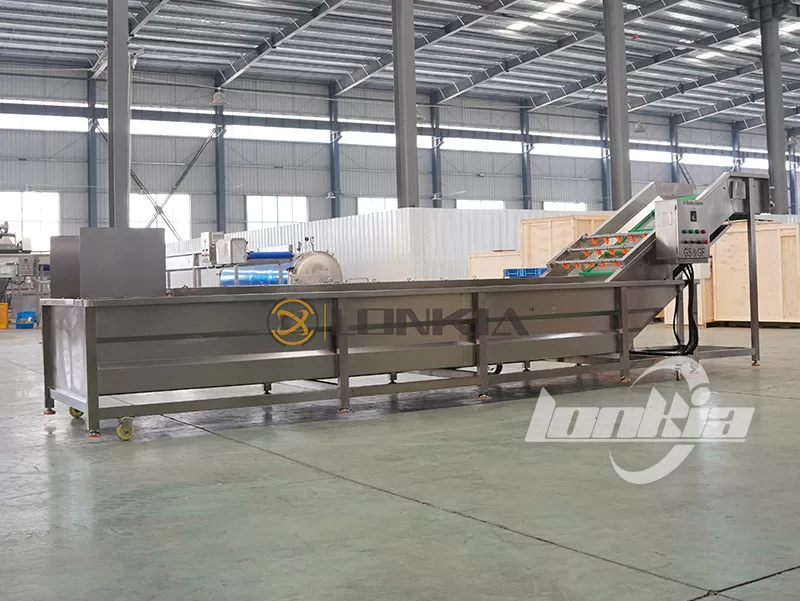
Regularly Inspect Drive and Conveyor Components
When the vegetable washing machine is in operation, the conveyor system must continuously move the produce through the washing area. Therefore, the conveyor belt, chains, sprockets, and related drive components should be inspected regularly.
Monitor Conveyor Speed and Operating Condition
If the conveyor belt drifts off course, becomes jammed, or emits abnormal noises, stop the machine immediately for inspection. Prolonged neglect of these issues may further affect feed stability and washing time.
For fruit and vegetable washer machines equipped with brush rollers, also inspect the wear on the brushes. When the bristles show significant wear, the cleaning effectiveness may be compromised, requiring adjustment or replacement based on actual usage conditions.
Pre- and Post-Operation Inspections Must Not Be Overlooked
Pre-Startup Inspection
Before starting the equipment each day, conduct a quick inspection following the sequence: "water system—conveyor—drive system—electrical system." Confirm that the water pump, spray system, conveyor system, and electrical controls are functioning normally before commencing production.
Additionally, avoid operating the equipment for extended periods under abnormal conditions. If abnormal vibrations, water leaks, or unusual noises are detected, shutting down the machine promptly to investigate is generally more convenient than addressing the issue during production.
Regular Maintenance Ensures Stable Equipment Operation
In addition to daily cleaning, a periodic maintenance schedule should be established based on the equipment's frequency of use to inspect the water pump, bearings, transmission components, motor, and electrical connections. LONKIA can provide washing equipment configurations tailored to different fruit and vegetable processing needs, helping customers develop equipment solutions better suited to their actual production processes.
Summary
For customers purchasing fruit and vegetable washing machines, in addition to processing capacity and cleaning methods, they should also consider whether the equipment is easy to clean, whether the filter components are easy to remove, whether the nozzles are easy to inspect, and whether key drive components are easy to maintain.
A fruit and vegetable washer machine suitable for long-term production should not only complete the washing task but also facilitate daily cleaning, inspection, and maintenance. Clarifying these details before purchase can reduce maintenance burdens during later use and help the equipment maintain consistent washing performance.