
In the modern fruit and vegetable processing industry, fruit grading machines have become essential equipment for improving product consistency and processing efficiency. Whether in fresh fruit packing centers, fruit and vegetable processing plants, or export sorting facilities, precise grading is necessary to meet the requirements of different markets regarding specifications, grades, and packaging. High-quality fruit grading machines not only improve sorting efficiency but also help companies establish standardized production processes. Different models of fruit grading machines support automatic grading by size, weight, or shape, and can be configured with corresponding grading methods tailored to specific fruit and vegetable products.
So, faced with equipment on the market featuring different configurations and grading methods, how should you choose a fruit grading machine that truly suits your production line?
Why Are Fruit Sorters Essential for Fruit and Vegetable Processing Lines?
Fruit grading machines are typically positioned after the washing process and before the packaging process, responsible for automatically sorting and outputting fruits and vegetables according to preset standards. Compared to manual sorting, mechanical sorting consistently maintains uniform standards, providing raw materials of consistent specifications for subsequent packaging, processing, or sales.
A fruit grading machine with stable performance typically offers the following advantages:
- It automatically performs continuous conveying and sorting, improving processing efficiency.
- Consistent grading standards reduce errors caused by human judgment.
- Parameters can be adjusted according to different product specifications.
- Seamless integration with washing, conveying, and packaging equipment to form an automated production process.
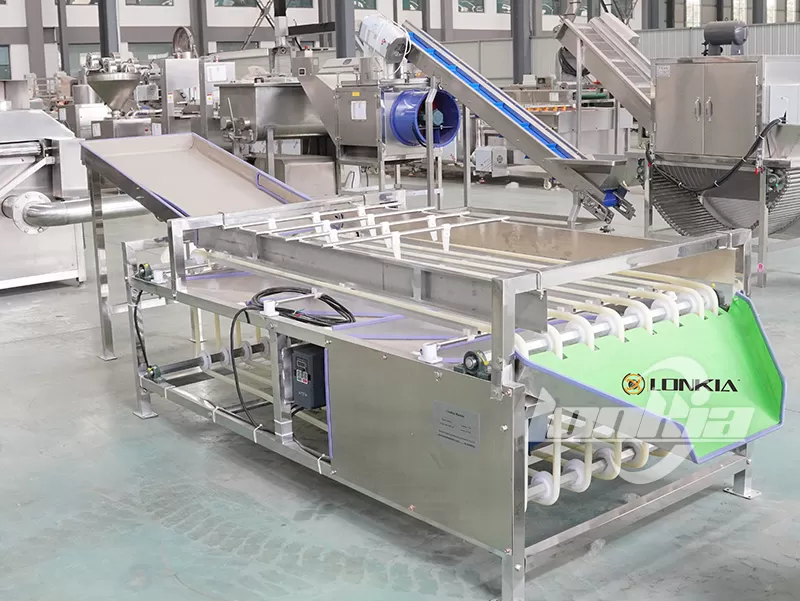
What Information Should You Confirm Before Selecting a Fruit Grading Machine?
Many customers focus solely on the equipment price when requesting a quote. In reality, providing accurate processing requirements is essential for selecting the truly suitable equipment configuration.
1. Identify the Type of Product to Be Processed
Different fruits and vegetables vary in shape, size range, and surface characteristics, and thus have different grading requirements. For example, round fruits such as apples, citrus, and tomatoes require different conveying and grading structures than elongated products like carrots, cucumbers, and yams. Lonkia can design corresponding grading solutions based on different products to meet a wide range of fruit and vegetable processing needs.
2. Determine Grading Criteria
When purchasing a fruit and vegetable grading machine, you need to determine in advance the criteria by which products will be classified, including:
- Size (diameter, length)
- Weight
- Shape
- Surface quality or appearance grade
Different markets have different grading standards, and the equipment can be configured with multiple output grades based on actual needs.
3. Does the Processing Capacity Match the Production Line?
Fruit grading machines must maintain a stable cycle time with the entire production line. If the processing capacities of upstream washing equipment and downstream packaging equipment differ, it can easily lead to product backlogs or downtime caused by waiting. Therefore, when selecting equipment, matching should be based on the hourly throughput and the overall configuration of the production line, rather than considering the speed of a single machine in isolation.
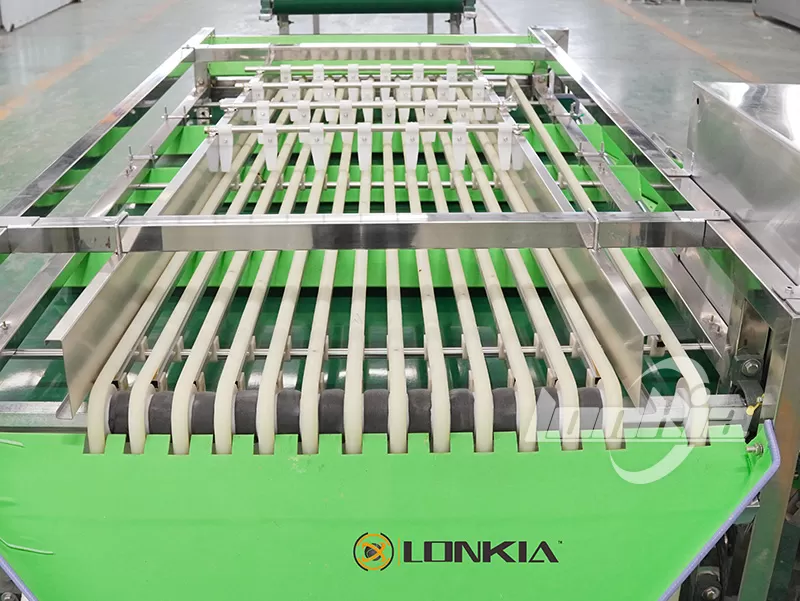
What Features Should a High-Quality Fruit Grading Machine Have?
High-Precision Grading System
Fruit grading machines automatically inspect and sort products using mechanical structures, sensors, or vision recognition systems to achieve stable and consistent grading results. Depending on the product, inspection can be based on size or weight.
Adjustable Grading Parameters
Different customers serve different markets and have varying product specification requirements. High-quality fruit grading machine for sale supports the adjustment of grading ranges and the number of grades, facilitating quick switching between different product specifications and enhancing operational flexibility.
Smooth Conveyor System
Fruits and vegetables must be transported smoothly to prevent rolling, piling up, or collisions that could affect grading results. A well-designed conveyor system ensures the equipment can continuously perform automatic grading, improving operational stability.
What Products Can a Fruit Grading Machine Process?
In addition to fruits, fruit grading machines are equally suitable for a wide variety of fruit and vegetable products, such as:
- Apples, pears, citrus fruits, lemons, and tomatoes.
- Root and tuber vegetables such as carrots, potatoes, onions, radishes, and sweet potatoes.
- Small fruits and vegetables such as cherry tomatoes and cherries.
Depending on product characteristics, different solutions—such as roller grading, weight grading, or visual inspection—can be configured to broaden the equipment's range of applications.
Conclusion
When selecting a suitable fruit grading machine, the key consideration is not the price, but whether it aligns with product characteristics, grading standards, and production line configurations. A well-configured machine with consistent grading performance can help businesses achieve greater uniformity, smoother production processes, and more flexible product specification management.
Before purchasing, it is recommended to prepare information on product types, size ranges, target grade counts, hourly processing capacity, and subsequent packaging requirements, and to communicate thoroughly with the equipment manufacturer to obtain a more precise and efficient fruit grading solution.