
For garlic processing companies planning to purchase a garlic peeler machine, production capacity is typically the first parameter to confirm during the selection process. How many kilograms of garlic can the machine process per hour? Does the rated capacity match the actual output? Do different garlic clove sizes affect processing speed? These questions directly impact equipment configuration and production planning.
A suitable garlic peeler machine must not only meet the target processing volume but also strike a good balance between peeling effectiveness, clove integrity, and stable continuous operation.
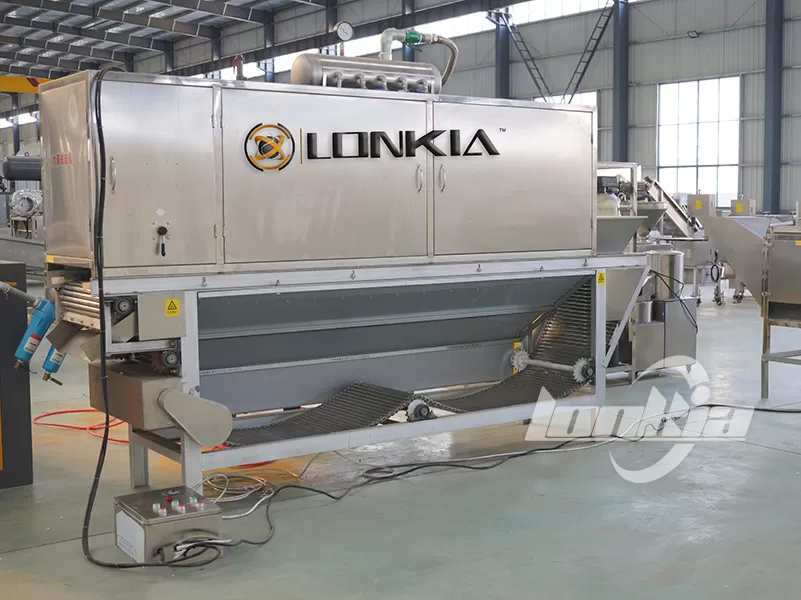
What Is the Capacity of a Garlic Peeler Machine?
Taking Lonkia's industrial garlic peeler as an example, the equipment page lists a nominal processing capacity of 100–150 kg/h. The machine uses a pneumatic peeling method, employing air pressure to separate the garlic cloves from their skins, thereby reducing the crushing and damage that can occur during traditional friction-based peeling processes.
It is important to note that 100–150 kg/h is the equipment's reference processing capacity, not an actual output that can be consistently achieved under all raw material conditions. Actual production capacity also depends on parameters such as garlic clove size, raw material condition, feeding method, air pressure, and peeling time.
What Factors Affect the Capacity of a Garlic Peeler Machine?
1. Garlic Clove Size
Garlic cloves of different sizes move differently inside the machine. If there is a significant variation in clove size, it may be necessary to adjust the air pressure and peeling time to balance peeling effectiveness and processing speed. Therefore, it is best to provide actual raw material samples or detailed specifications when purchasing the equipment.
2. Air Pressure and Peeling Time
The pneumatic system is the core component of the garlic peeler machine. The equipment can adjust air pressure and peeling time according to different types and sizes of garlic cloves. When these parameters are set appropriately, a stable processing speed can be maintained while ensuring effective peeling.
Higher air pressure is not necessarily better. Insufficient pressure may result in residual garlic skins, while excessive pressure or prolonged processing time may increase the risk of damage to the garlic cloves. Therefore, it is crucial to conduct raw material testing before actual production begins.
3. Feeding and Production Flow
The machine's processing capacity alone accounts for only part of the production line's efficiency. If the upstream garlic clove separation, manual loading, or downstream sorting processes cannot keep pace, the peeler—even with a high processing capacity—will be unable to sustain its designed throughput.
For continuous processing operations, equipment should be selected based on the entire production workflow, rather than focusing solely on a single machine's kg/h rating.
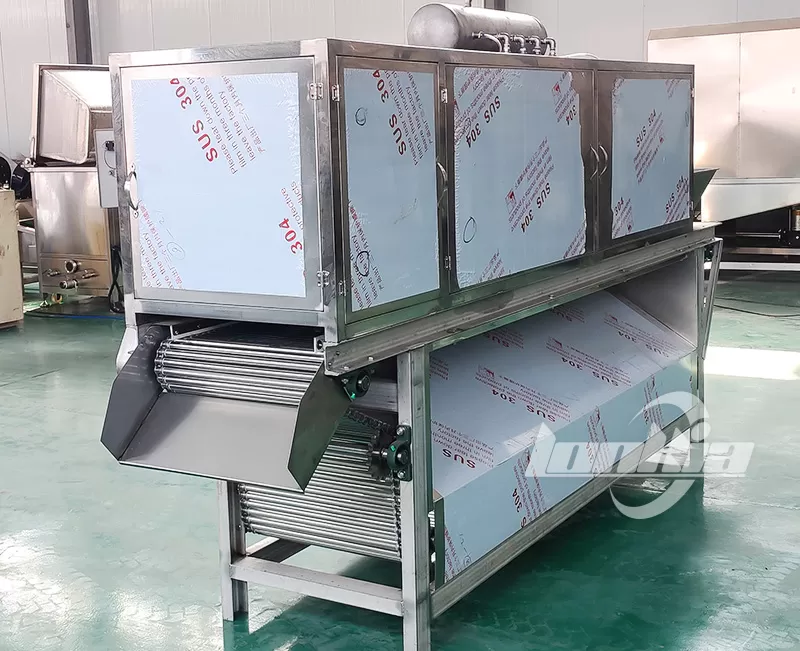
How to Choose the Right Capacity?
It is recommended to calculate actual production requirements before purchasing. For example, if a factory needs to process a certain quantity of garlic daily, the required hourly throughput can be calculated based on daily operating hours, with a reasonable production buffer factored in.
Additionally, the following information should be provided to the equipment manufacturer:
- Target hourly throughput
- Planned daily throughput
- Average size and specifications of garlic cloves
- Condition of raw material
- Requirements for peeling integrity
- Whether the final product will be packaged fresh garlic, garlic paste, or garlic powder
Test the Machine With Your Garlic Before Purchase
If customers have high requirements for actual production capacity, peeling effectiveness, or clove integrity, we recommend conducting raw material testing before purchase. Through testing with actual garlic cloves, you can simultaneously observe processing capacity, peeling effectiveness, clove damage, and continuous operation performance.
Lonkia can provide recommendations on selecting a garlic peeling machine based on the customer's raw materials and target production capacity, helping customers more accurately assess their actual production needs before finalizing the configuration.
Final Considerations
When selecting a garlic peeling machine, it is even more important to confirm whether the stated production capacity is suitable for your specific garlic clove specifications, production schedule, and finished product requirements. The correct equipment selection should be based on actual raw material testing and comprehensive production needs, rather than simply comparing theoretical production capacity figures.
If your goal is to consistently produce peeled garlic cloves, we recommend providing your raw material specifications, target kg/h, operating hours, and intended use of the finished product when requesting a quote. This will ensure you receive a more accurate equipment proposal and quotation.