
In the food processing industry, "how to wash cherry tomatoes" is not merely a basic question; it directly impacts product quality, safety standards, and production efficiency. Cherry tomatoes have thin skins that are easily damaged, and dirt and debris tend to accumulate around the stem ends. Traditional washing methods often struggle to balance thorough cleaning with maintaining the integrity of the fruit. To address this challenge, bubble washers have become a widely adopted core equipment solution in processing plants.
Key Challenges in Washing Cherry Tomatoes
In actual production, customers typically face the following issues:
- The skin is prone to tearing, and traditional friction-based washing often causes damage
- Pesticide residues and soil particles adhere to the stem ends or crevices and are difficult to remove
- Manual washing is inefficient and cannot meet the demands of continuous production
- Inconsistent cleaning affects subsequent grading and packaging
These issues directly impact product pricing and export standards, making the selection of appropriate washing equipment particularly critical.
The Bubble Washing Machine Solution
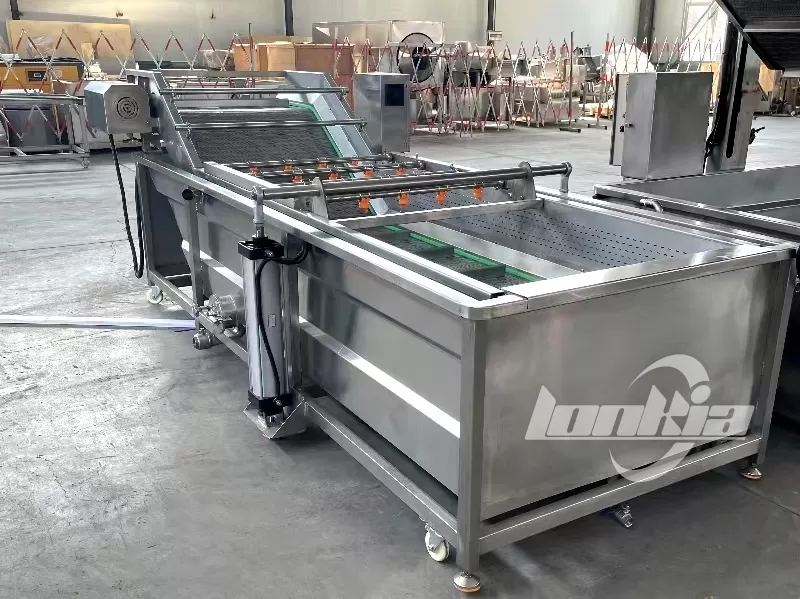
The bubble washing machine is specifically designed for fruits and vegetables, making it particularly suitable for delicate products like cherry tomatoes. The equipment achieves a gentle yet thorough cleaning effect through the combination of bubbling and water flow.
Its core advantages include:
- No mechanical friction, reducing damage rates
- Comprehensive cleaning, covering the stem end and recessed areas
- Continuous conveying, improving processing efficiency
- Stable cleaning process, suitable for standardized production
Compared to manual washing or simple spray systems, bubble washers can significantly improve overall processing quality.
An Analysis of the Bubble Washer's Operating Principle
The operation of a bubble washer is based on a combined mechanism of bubbles, water flow, and conveyor movement:
- After water is filled into the tank, an air pump generates a large volume of bubbles.
- As the bubbles rise, they drive the water flow, causing the produce to tumble.
- Cherry tomatoes continuously tumble in the water, ensuring comprehensive contact cleaning
- Simultaneously, a high-pressure spray provides a secondary rinse
- Impurities sink and floating debris is separated, preventing secondary contamination
This method effectively removes soil, impurities, and pesticide residues while avoiding the impact damage common in traditional washing methods.
Enhancing Processing Efficiency and Product Consistency
For food processing plants, washing is not merely a pre-processing step; it also impacts the stability of the entire production line. Bubble cleaning equipment offers the following benefits:
- Continuous operation, reducing reliance on manual labor
- Consistent cleaning results, facilitating subsequent sorting and packaging
- Adjustable cleaning intensity to accommodate tomatoes of varying ripeness
- Easy integration into the entire production line (e.g., upstream of grading and cutting)
In practical applications, this bubble washing machine enables automated integration from raw material input to washed output, significantly accelerating production pace.
Application Scenarios and Compatibility
Bubble washers are not only suitable for cherry tomatoes but can also be widely applied in various fruit and vegetable washing scenarios, such as:
- Fresh vegetable processing
- Pre-packaged vegetable distribution centers
- Salad and ready-to-eat food production
- Pre-processing for fruit and vegetable sorting
Its flexible design allows the equipment to accommodate raw materials of different sizes and shapes, improving equipment utilization.
Recommendations for Selecting a Bubble Washer
When selecting equipment, it is recommended to focus on the following:
- Whether the cleaning intensity is adjustable
- Whether it features a secondary spray system
- Whether the conveyor structure is stable
- Whether it supports full-line integration
Taking the Lonkia bubble washing machine as an example, it demonstrates mature structural design and cleaning stability, capable of meeting food processing plants' dual demands for efficiency and quality, while also supporting customized configurations to adapt to different production lines.
Conclusion
When addressing the question of "how to wash cherry tomatoes," food processing plants require more than just a washing method; they need a stable, efficient, and sustainable equipment solution. Through scientific cleaning principles and automated design, bubble washing machines effectively resolve issues such as incomplete cleaning, high damage rates, and low efficiency, making them one of the key pieces of equipment in current cherry tomato processing.
If you are planning a fruit and vegetable processing line, selecting the right washing equipment will directly determine product quality and market competitiveness.