
During vegetable processing, dicing size directly impacts product quality, processing efficiency, and the final texture of the food. Therefore, when selecting a potato dicer machine, one of the most critical questions for many customers is: What dicing size should be chosen?
Different foods have varying requirements for cube dimensions. Understanding the potato cutter machine's cutting structure and size selection logic helps businesses configure equipment more effectively and enhance production stability.
Common Dicing Size Ranges for Potato Dicer Machines
Generally, potato dicing machines achieve different dicing sizes by swapping blade sets. Common specifications include:
- 3mm
- 5mm
- 6mm
- 8mm
- 10mm
- 12mm
- 15mm
- 20mm
These sizes meet most food processing needs, such as vegetable mixes, frozen foods, salads, or pre-made meal products.
The potato cutting equipment employs multiple blade sets to perform three-dimensional cutting, enabling raw materials to undergo slicing, dicing, and cubing in a single processing step, resulting in uniform cube shapes.
Practical Applications of Different Dicing Sizes
When selecting a dicing size, customers typically need to consider the product's intended use.
- 3–5mm Fine Dice: Suitable for seasoned vegetables, sauce ingredients, or finely mixed foods. This size allows ingredients to absorb flavors more quickly during processing or heating.
- 6–10mm Standard Dice: The most common size in food processing, suitable for frozen vegetables, quick-frozen potato cubes, salads, and similar products. Uniform dimensions facilitate subsequent processing like blanching, freezing, or drying.
- 12–20mm Large Dice: Ideal for stew ingredients, pre-made dishes, or certain central kitchen ingredients in catering. This size preserves the intact texture of ingredients.
How Potato Cutter Machines Achieve Size Adjustment?
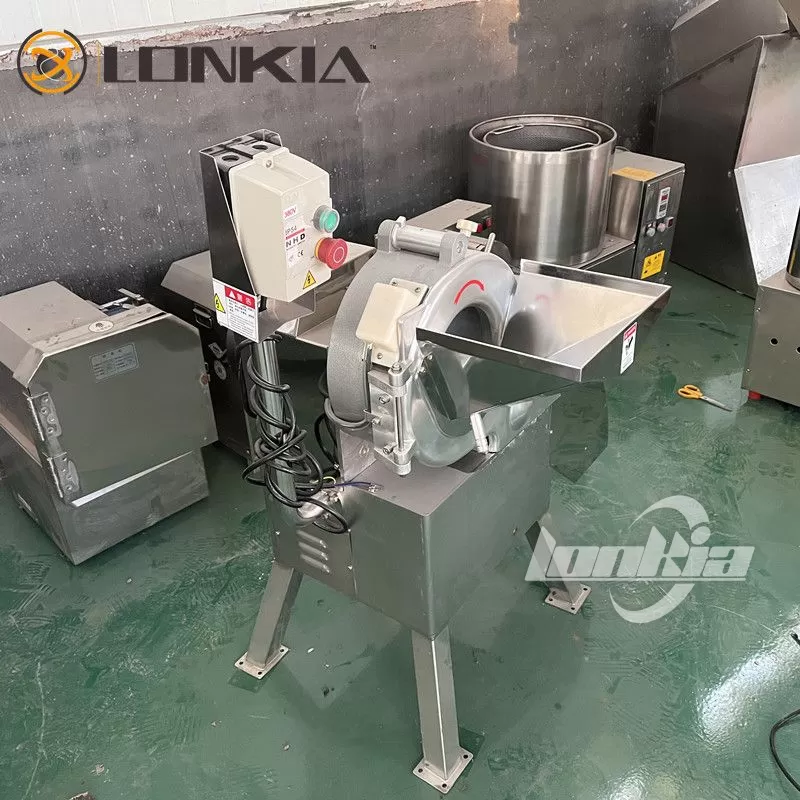
Many customers worry about complex size adjustments when selecting equipment. In reality, potato dicer machines typically employ a modular blade assembly structure.
When changing dicing sizes, simply swap out the corresponding blade combination to complete the adjustment. The entire replacement process features a simple structure, allowing operators to perform it after minimal training.
This design ensures both cutting precision and stable machine operation.
Key Factors for Selecting Dicing Dimensions
In practical production, customers should consider the following three aspects:
- Raw Material Characteristics: Different ingredients vary in hardness, such as potatoes, carrots, and onions. Harder materials typically suit standard-sized dicing.
- Product Processing Method: If products require freezing or drying, uniform dimensions ensure consistent heating or cooling.
- Downstream Processing Equipment: Dice size must also align with subsequent machinery, such as blanching machines, freezers, or packaging equipment.
Consistent Dicing Quality Starts with Reliable Equipment
A high-quality potato dicer machine not only offers multiple dicing specifications but also ensures each cube features sharp, clean edges and a smooth surface.
Premium equipment typically features food-grade stainless steel construction and high-hardness blades, enhancing durability while meeting food processing hygiene standards.
In vegetable processing equipment, Lonkia optimizes blade assembly structures and overall machine design to maintain stable cutting performance during continuous operation, delivering reliable production support for food processing enterprises.
Conclusion
Selecting the appropriate dicing size is crucial for ensuring food quality. By understanding the application scenarios of different sizes and the structural characteristics of equipment, enterprises can more precisely configure potato dicer machines, thereby improving production efficiency and maintaining product consistency.
For businesses requiring stable dicing quality and efficient production, choosing equipment with a well-designed structure and reliable blade assemblies is an important step in building a high-quality food production line.