
Vegetable blanching is one of the most essential steps in modern food processing, especially for industries producing frozen vegetables, canned foods, dehydrated ingredients, and ready-to-cook meals. With strict quality control standards and the need for long shelf life, food processors rely on vegetable blanching machines to deactivate enzymes, preserve color, and ensure consistent quality.
In this article, we explain what vegetable blanching is, why enzyme inactivation is critical, and how a blanching machine improves the overall processing workflow.
What Is Vegetable Blanching?
Vegetable blanching is the process of briefly exposing vegetables to hot water (or sometimes steam) followed by rapid cooling. The primary goals are:
Deactivating enzymes that cause spoilage
Preserving natural color, especially in green vegetables
Softening the texture for cutting or further processing
Reducing microbial load
Preparing vegetables for freezing or canning
Blanching does not fully cook the vegetables. Instead, it applies just enough heat to protect quality during storage and further handling.
Why Enzyme Deactivation Is Essential
Fresh vegetables contain natural enzymes such as:
Peroxidase
Polyphenol oxidase
Lipoxygenase
These enzymes can cause undesirable changes during storage:
Browning and color loss
Texture softening
Fading of flavor
Accelerated spoilage
Nutrient degradation
If enzymes are not properly inactivated, even frozen vegetables will lose quality over time. That is why industrial processors consider blanching a non-negotiable step.
A vegetable blanching machine ensures that enzymes are thoroughly deactivated through precise heat treatment.
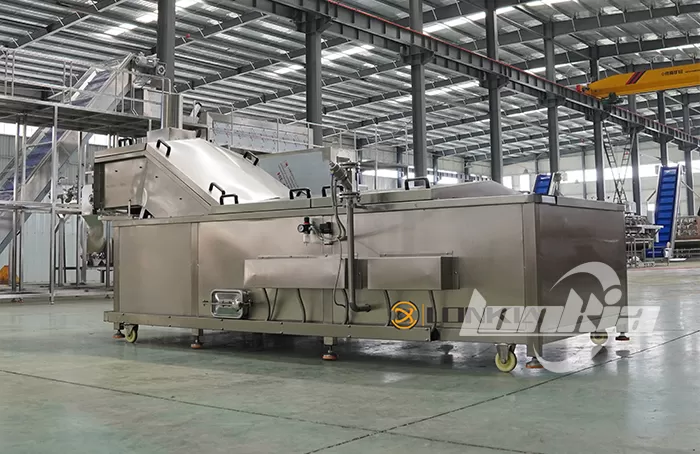
How a Vegetable Blanching Machine Works
A modern blanching machine uses circulating hot water (or steam in some models) to deliver consistent heating. The typical process includes:
1. Feeding the Vegetables
Vegetables enter the machine via a conveyor or feed hopper.
2. Controlled Hot-Water Blanching
The machine maintains a precise temperature, usually between 85–98°C, depending on the vegetable type.
Features include:
Adjustable blanching time
Temperature monitoring
Hot water recirculation
Uniform heat distribution
3. Rapid Cooling Section
After heating, vegetables pass through a cooling stage using:
Chilled water
Air cooling
Ice-water systems
This step stops the cooking process and locks in color and texture.
4. Discharge & Next Processing Step
Blanched vegetables move to:
Cutting/dicing
Freezing
Drying
Canning
Packaging
This continuous operation ensures high output and stable quality.
Benefits of Using a Blanching Machine for Enzyme Inactivation
✔ 1. Consistent Temperature Control
Manual blanching often leads to uneven heating. A machine ensures precise, repeatable conditions.
✔ 2. Uniform Product Quality
Every batch receives equal heat treatment, reducing defects.
✔ 3. Better Color and Texture Preservation
Blanching stabilizes chlorophyll and maintains the natural appearance of vegetables.
✔ 4. Higher Processing Capacity
Industrial machines handle hundreds to thousands of kilograms per hour.
✔ 5. Energy and Water Efficiency
Modern blanchers use:
Water recirculation
Heat recovery systems
Automated control panels
✔ 6. Integration with Production Lines
Blanchers work seamlessly with:
Washing machines
Conveyors
Cooling tunnels
IQF freezing systems
What Types of Vegetables Require Blanching?
Almost all vegetables benefit from blanching before freezing or processing, including:
Broccoli
Spinach
Carrots
Beans
Peas
Cauliflower
Cabbage
Mixed vegetables
Different vegetables require different blanching times, which can be easily set on a blanching machine.
Why Industrial Processors Prefer Blanching Machines
A blanching machine eliminates guesswork by offering:
Controlled heating
High throughput
Continuous automation
Stable, repeatable results
This makes them essential in large-scale production environments such as:
Frozen vegetable plants
Canning factories
Ready-meal producers
Dehydration facilities
Central kitchens
Conclusion
Vegetable blanching is a fundamental process for preserving quality, and enzyme inactivation is the most critical reason it is used throughout the food industry. A vegetable blanching machine provides reliable, high-efficiency, and large-scale blanching that manual or small-batch steaming methods simply cannot match.
For processors aiming to maintain color, texture, flavor, and shelf life, investing in a blanching machine is one of the smartest decisions.