
In the modern fruit and vegetable processing industry, the washing stage directly impacts product quality, processing efficiency, and the stable operation of subsequent processes. Compared to traditional manual washing methods, the bubble washer has become a standard piece of equipment in fresh-cut vegetable processing, frozen vegetable production, fruit processing, and central kitchens due to its continuous washing capability, stable operation, and minimal damage to produce.
For food processing companies, selecting the right Bubble Washer not only enhances cleaning effectiveness but also optimizes production processes and improves the overall operational efficiency of the production line.
How the Bubble Washer Works?
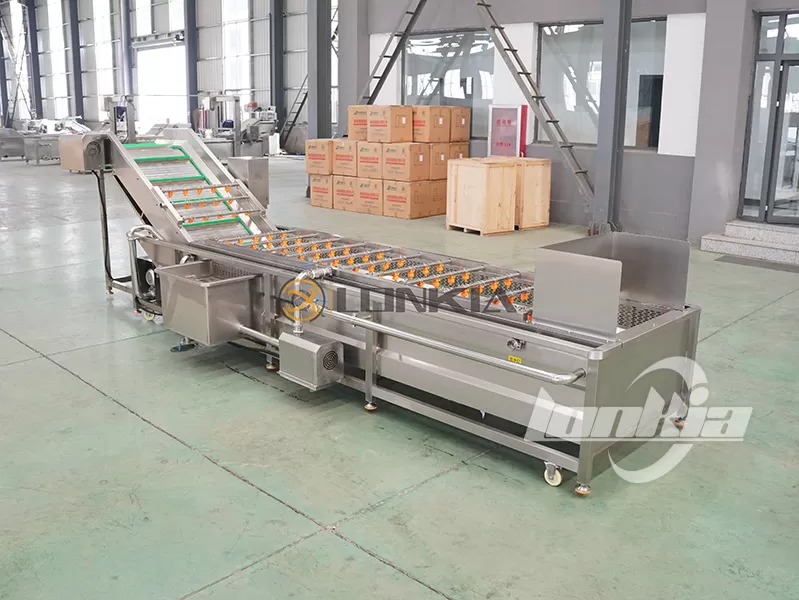
The bubble washer primarily achieves cleaning through bubble agitation, water circulation, and high-pressure spraying.
During operation:
- A large volume of bubbles is continuously generated at the bottom of the tank
- The water flow carries the produce, causing it to tumble and move within the water
- Surface dirt and impurities are rapidly separated
- The spray system performs a secondary rinse
Compared to traditional brush-washing systems, the bubble washing machine's cleaning method is gentler, reducing surface damage to fruits and vegetables while maintaining excellent cleaning uniformity.
To enhance continuous operation capabilities, the equipment is typically equipped with a recirculating filtration system that promptly filters out floating impurities, ensuring stable water circulation.
Which Fruits and Vegetables Are Suitable for the Bubble Washing Machine?
The bubble cleaning machine offers broad applicability and can meet the cleaning needs of a wide variety of fruits and vegetables.
Common applications include:
- Leafy greens such as lettuce, spinach, and cabbage
- Fruits such as tomatoes, apples, and grapes
- Root and tuber crops such as potatoes, radishes, and ginger
- Pre-packaged fresh produce and central kitchen pre-processing products
For leafy greens, the gentle tumbling action of the bubbles reduces leaf damage and improves product integrity.
For root and tuber crops, the bubble washer effectively removes surface soil, providing a stable foundation for subsequent processes such as peeling and cutting.
Currently, this equipment is widely used in:
- Pre-packaged vegetable processing lines
- Frozen vegetable processing lines
- Fruit washing and sorting lines
- Central kitchen processing projects
Why More and More Food Processing Plants Are Choosing the Bubble Cleaning Machine?
As the food processing industry's demand for automation continues to rise, traditional manual washing methods can no longer meet the needs of continuous production.
Compared to manual washing, the bubble cleaning machine offers the following advantages:
- Continuous conveying, improving production efficiency
- More uniform and consistent cleaning results
- Reduced labor intensity
- Lower product damage rates
- Easier integration with downstream equipment
Many customers also place great emphasis on equipment materials and long-term operational stability when purchasing equipment.
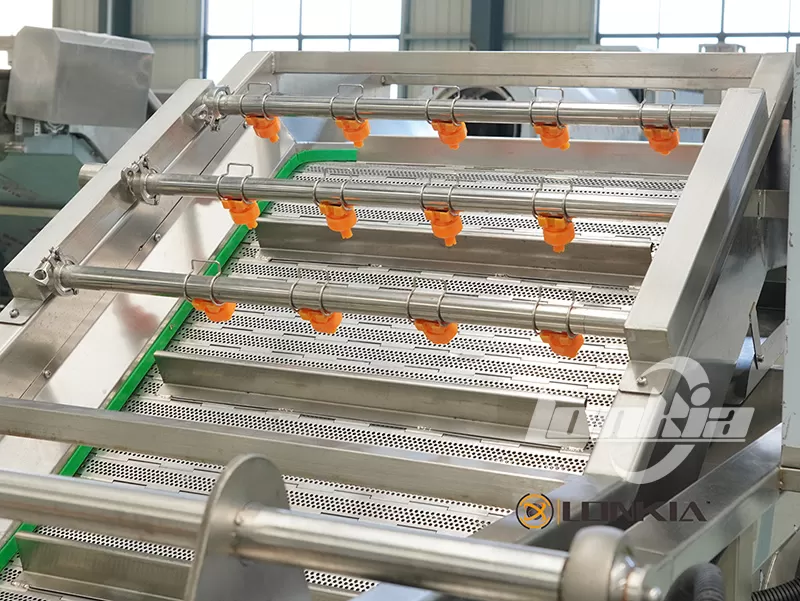
Current mainstream bubble washing machines are generally manufactured from SUS304 stainless steel, offering:
- Excellent corrosion resistance
- More stable equipment structure
- Easier daily cleaning and maintenance
- Greater suitability for food processing environments
Additionally, the modular structural design reduces maintenance complexity and enhances operational stability.
How to Choose the Right Bubble Washing Machine?
Different products have varying requirements for cleaning methods and equipment structure, making equipment selection critical.
When selecting bubble washing equipment, customers should typically focus on the following:
- Product Type: Leafy vegetables require a gentler cleaning effect, while root and tuber vegetables require stronger mud and sand removal capabilities.
- Production Capacity Requirements: Equipment length, conveyor speed, and spray system configuration all directly impact overall processing efficiency.
- Water Circulation System: Stable circulation and filtration capabilities effectively reduce the buildup of impurities and enhance continuous operation.
- Production Line Integration: If the system needs to be connected to a cutter, blancher, or air dryer, it is essential to confirm the conveyor height and equipment connection methods in advance.
A stable equipment configuration not only improves cleaning performance but also minimizes downtime issues in subsequent production.
As a professional food processing equipment manufacturer, Lonkia continues to provide customers with stable and reliable bubble washer solutions. These can be customized to meet the specific needs of various fruit and vegetable processing operations, helping customers improve production efficiency and product quality, and offering food processing enterprises more efficient and stable equipment support.