
In the onion processing industry, equipment reliability directly impacts production efficiency, peeling quality, and labor costs. Many food processing plants, after purchasing industrial onion peeling machines, often focus more on production capacity while overlooking the importance of ongoing maintenance. In fact, proper maintenance not only extends the equipment's lifespan but also effectively reduces downtime caused by malfunctions, improves peeling efficiency, and ensures product consistency.
For factories engaged in long-term continuous production, a well-maintained industrial onion peeling machine can maintain stable operation, reduce raw material waste, and lower repair costs.
Why Maintenance of Industrial Onion Peeling Machines Is So Important?
Industrial onion peeling machines typically use a pneumatic peeling mechanism, which rapidly separates the onion skin using high-pressure airflow. After prolonged operation, the conveyor chain, air supply system, nozzles, and separation mechanism are prone to wear or clogging.
Without daily maintenance, common issues include:
- Incomplete peeling
- Increased onion breakage rate
- Unstable air pressure
- Conveyor jams
- Increased equipment noise
- More frequent downtime
These issues ultimately impact the factory's overall production capacity and order fulfillment efficiency.
Daily Cleaning is Key to Ensuring Effective Peeling
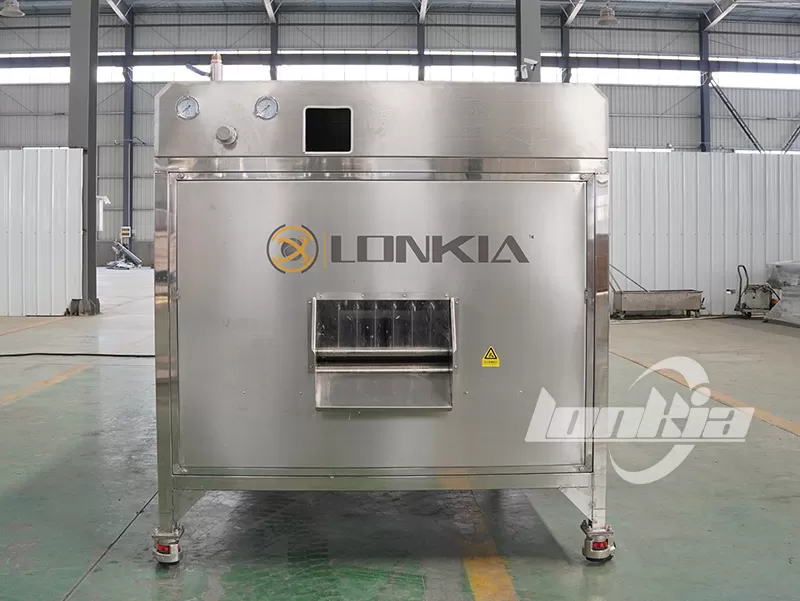
Onion skin fragments and juices easily adhere to the interior of the equipment; if not cleaned promptly, they can impair the airflow separation process. This is particularly true for pneumatic onion peelers, which require a high level of cleanliness in the air jet system.
It is recommended to perform the following tasks daily after production ends:
- Clean residual material from the conveyor chain and the interior of the peeling chamber
- Wipe down the feed inlet and discharge area
- Check the nozzles for blockages
- Remove accumulated onion peel fragments
- Keep the control panel dry
Equipment constructed with 304 stainless steel is easier to clean and better meets food processing hygiene requirements. Manufacturers specializing in food processing equipment, such as Lonkia, typically consider ease of cleaning during the design phase to enhance the factory's continuous production efficiency.
Regular Inspection of the Pneumatic System is Crucial
Compressed air serves as the core power source for industrial onion peelers. Insufficient air pressure prevents thorough separation of the outer skin, while excessively high pressure may increase onion damage rates.
In actual production, many customers encounter issues with declining peeling rates, which are often fundamentally caused by abnormalities in the air system.
Key maintenance tasks include:
- Checking the operating status of the air compressor
- Inspecting air hoses for leaks
- Cleaning the air filter
- Check the stability of the air pressure
- Regularly drain accumulated water from the air compressor
Stable air pressure not only improves peeling performance but also reduces energy waste.
Conveyor Chains and Drive Mechanisms Must not be Overlooked
During continuous operation, conveyor chains and drive components are prone to loosening or wear. If left unchecked for extended periods, this may lead to material jams, misalignment, or even machine shutdowns.
It is recommended to regularly:
- Check the tension of the chains
- Apply grease to the bearings
- Inspect the operating condition of the gearbox
- Tighten screws and connecting components
- Monitor the equipment for abnormal vibrations
Many large food processing plants maintain equipment maintenance records to reduce failure rates through periodic maintenance.
How to Extend the Service Life of Industrial Onion Peeling Machines
In addition to basic maintenance, proper operation is equally important. Onions of varying sizes and moisture content can affect equipment performance. Overloading the onion peeler machine or introducing foreign objects can increase the onion peeling equipment's workload.
To ensure long-term, stable operation of the equipment, we recommend:
- Maintaining a consistent feed rate
- Preventing hard objects such as stones from entering the equipment
- Providing regular training for operators
- Scheduling operating hours appropriately based on production volume
Today, an increasing number of food processing companies are prioritizing the reliability of automated onion processing equipment. A well-maintained industrial onion peeling machine not only boosts production efficiency but also helps factories reduce long-term operating costs, providing a stable supply of raw materials for subsequent processes such as cutting, washing, and packaging.