
Washing cucumbers and other fruits and vegetables is a fundamental yet critical step in production lines. Selecting the appropriate cucumber washing machine not only impacts cleaning efficiency and food safety but also directly affects a company's investment budget. Therefore, understanding the factors influencing price is essential for businesses to make informed purchasing decisions.
Material and Structural Quality are Core Determinants of Cost
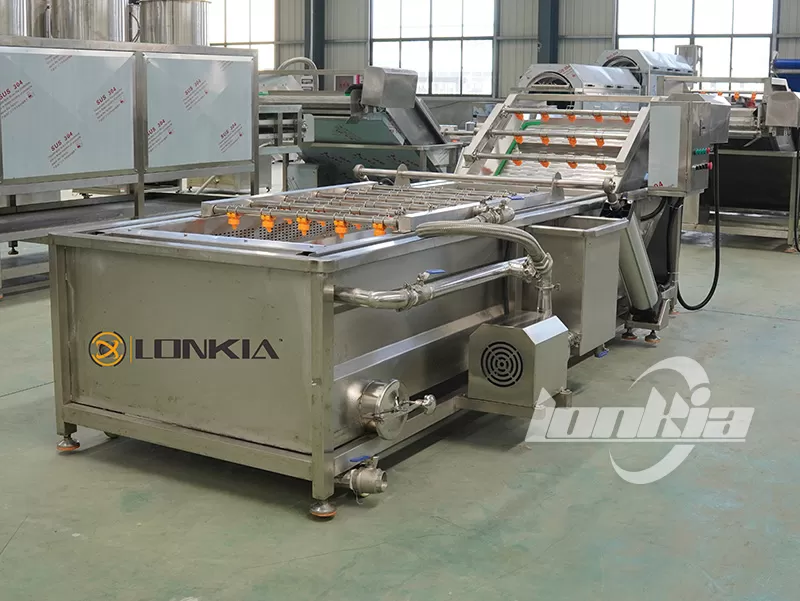
As cucumber washing machine comes into direct contact with water and produce, customers prioritize hygiene and durability. In most commercial washers, food-grade stainless steel (such as 304 or 316) is standard. These materials offer superior corrosion resistance and longevity, though they increase manufacturing costs. Compared to sheet metal or lower-grade metals, higher-grade stainless steel ensures greater durability, lower maintenance costs, and extended service life.
For customers, while high-quality materials mean a higher initial investment, they offer superior long-term value—especially in production environments requiring continuous, long-term operation.
Technical Features and Washing System Complexity
Price variations in cucumber washing machines largely stem from integrated technology and feature configurations:
- Basic Washing: Single spray or bubble systems suit fundamental cleaning needs.
- Advanced Features: Including recirculating filtration, sedimentation systems, and automatic sludge discharge, which enhance equipment performance and user experience.
- Additional Options: Features like automated control panels, PLC systems, variable-speed conveyors, or advanced ozone sterilization significantly increase costs.
For instance, a machine with equivalent capacity but incorporating automatic temperature control, smart sensors, and multi-stage washing processes typically commands a substantially higher price than a basic model.
Capacity and Size Directly Impact Pricing
Capacity is often one of the first metrics customers consider for cucumber washer machines. Greater processing capacity necessitates:
- Longer wash tanks
- More powerful pumps and conveyor systems
- Sturdier overall structural design
All of which correspond to higher manufacturing costs. Market conditions show significant price variations across different capacity models (ranging from several thousand to tens of thousands of dollars).
Therefore, when planning budgets, customers should not only consider current processing needs but also allow room for future growth.
Brand Reputation and After-Sales Service Impact Long-Term Value
Many customers tend to focus solely on the initial price when selecting equipment. However, brand reputation and after-sales service systems ultimately determine machine stability and long-term total cost of ownership (TCO). Well-known brands typically:
- Offer more comprehensive spare parts supply
- Provide standardized installation and commissioning services
- Offer technical support both in and out of warranty periods
For instance, Lonkia prioritizes structural optimization and user experience in its cucumber washers. Through standardized production processes and responsive after-sales service, it has earned the trust of numerous food processing enterprises.
For equivalent configurations, a slightly higher quote from a reliable brand often translates to lower maintenance risks and extended service life.
Customization Also Drives Up Costs
Different clients have varying production line configurations, with some requesting:
- Seamless integration with existing conveyor systems
- Additional stainless steel enclosures or safety guards
- Custom dimensions or specialized washing protocols
These requirements increase design and manufacturing expenses. For clients prioritizing precise cleaning outcomes and high-efficiency production chain integration, moderate customization investment is justified.
Conclusion: Evaluating the True Value of Cucumber Washers
In summary, the primary factors influencing bubble washer price include:
- Material quality and durability
- Technical configuration and functional complexity
- Production capacity and dimensional specifications
- Brand value and after-sales support
- Customization requirements
Understanding these factors not only helps customers rationally plan procurement budgets but also avoids hidden costs arising from decisions based solely on low prices. When selecting equipment, it is advisable to conduct a comprehensive evaluation considering performance, long-term operational efficiency, and service support—rather than focusing solely on the quoted price.
For customized cucumber washing machine solutions tailored to specific production volumes or operational conditions, please contact us for precise configuration recommendations.